Zombie Party
Version: 1.0.4
325.00MB
4.1
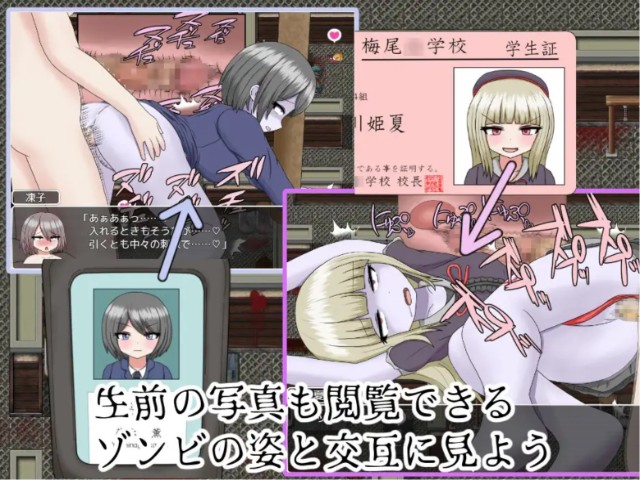


Zombie Party is a pixel-art adult adventure that places you in the role of Toko Kensaki, a solitary researcher whose basement experiments spill into the ruined streets of Seisou City. In Zombie Party you balance exploration, tactical encounters and ethically ambiguous research as you scavenge supplies, document transformed beings and make decisions that shape the narrative. The opening hours introduce the core loop—searching, studying and surviving—while later play opens branching routes and multiple endings that reward careful observation and different experiment choices.
The game’s exploration focuses on interlinked districts of Seisou City: ruined residential blocks, abandoned labs and overgrown industrial ruins conceal supplies, log entries and optional encounters. Movement and navigation emphasize careful resource management and environmental storytelling rather than constant combat, encouraging players to approach each area with planning and curiosity.
Tactical combat in Zombie Party emphasizes positioning, enemy patterns and using limited resources. Encounters require you to weigh risk versus reward: some transformed creatures are best avoided, others can be studied to unlock research options. Combat is presented in a clear, pixel-art style that keeps the focus on decision-making rather than flashy mechanics.
The research and experimentation system is central to progression. By studying specimens you unlock new data, crafting options and narrative branches that influence future interactions. Research choices can improve survival tools, alter the behavior of certain enemies or open new dialogue paths with NPCs. These mechanics are designed to encourage replaying the story with different priorities and ethics.
Visual presentation blends tight pixel-art environments with over 541 detailed CG images and character portraits that punctuate key story moments. The contrast between low-resolution exploration and higher-fidelity visual scenes reinforces emotional beats and brings major choices to life. A haunting, atmospheric soundtrack supports the mood and dynamically reacts to major events and endings.
Zombie Party uses an intuitive control scheme suited for mobile play: tap-to-move, context-sensitive interaction buttons and accessible menus keep exploration and research straightforward. Combat interfaces present clear options for actions, study commands and item use so players can make informed tactical choices quickly. Controls are responsive and built to work on a variety of screen sizes; common actions are mapped to persistent on-screen icons and contextual menus to minimize confusion.
Progression combines story beats, specimen research and resource-based upgrades. As you document transformed beings and complete experiments, new recipes, tools and passive improvements become available that change how you approach encounters. Customization focuses on practical choices—what tools to carry, how to allocate limited resources and which research paths to pursue—rather than cosmetic unlocks, reinforcing the survival and narrative aspects of the game.
Levels are designed as connected zones with optional side areas that reward exploration. Many narrative threads remain hidden on the first playthrough and require different research priorities to unlock. Multiple endings are tied to the decisions you make in experiments, how you treat other survivors and the specimens you choose to study. This branching structure encourages several playthroughs to see alternate outcomes and to refine strategies for tougher encounters.
Zombie Party aims to be approachable while retaining challenge. Players can expect difficulty that rewards planning and experimentation rather than reflex alone. The game includes adjustable difficulty options and clear on-screen tooltips to explain mechanics and research outcomes. Text is kept legible against background art and key story moments include readable CG captions to support players who follow the narrative closely.
The single-player, offline design ensures you can play Zombie Party without an online connection; your progress and unlocked research persist locally. Challenge systems are built around resource scarcity, enemy variety and the moral trade-offs presented by experimentation. Expect tense, memorable encounters and the potential for surprising outcomes when experiments produce unpredictable results.
Zombie Party offers a dense narrative experience with layered choices, deep replay value and a distinctive audiovisual identity. Players who appreciate tactical survival and branching stories will find the research systems rewarding. That said, the game contains mature themes and provocative subject matter presented in a neutral, narrative-focused manner; these elements may not be suitable for all audiences. Experimental mechanics and difficult encounters can create moments of frustration for players who prefer more forgiving gameplay, but they also create the stakes that make outcomes meaningful.
Overall, Zombie Party is a thoughtful blend of survival strategy, narrative branching and experimental systems presented in a striking pixel-art package, designed for players who enjoy careful planning, discovery and replay-driven storytelling.