Kamehouse Challenge
Version: 0.2.0
79.00MB
4.4
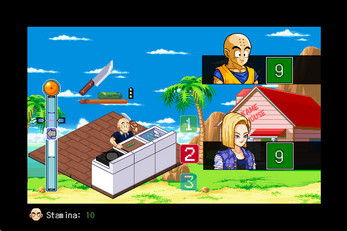
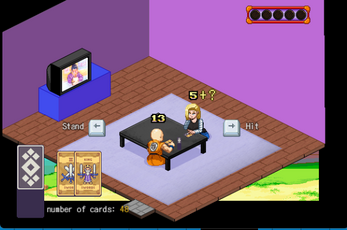
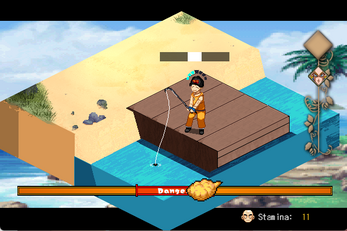
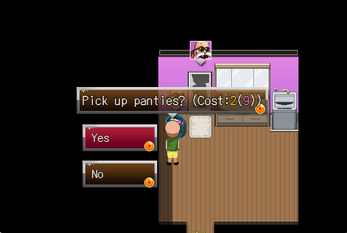
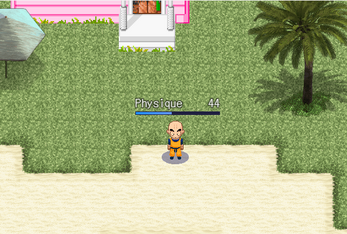

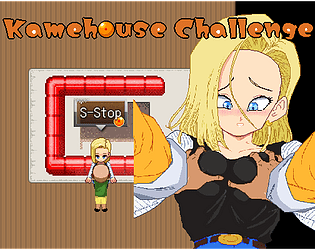
Kamehouse Challenge is an adult-themed sandbox roguelite that places you in the roles of Krillin and Master Roshi across a compact, day-limited campaign where short skill tests and longer-term choices shape each run. The premise pairs a sequence of fast, skill-based mini-games with branching progression, stat training and a system of unlockable mature events; it is designed for players who appreciate replayable, character-driven challenges with tactical resource management rather than open-ended simulation.
The Kamehouse Challenge experience mixes a clock-like time limit with roguelite persistence: each playthrough lasts a fixed number of in-game days, forcing prioritization between immediate challenges and long-term upgrades. Seven distinct mini-games — including pickle-cutting, beerpong, blackjack, fishing, dice, boxing and baseball — provide a range of mechanical focuses from precision and timing to probability and risk management. Characters occupy complementary roles, with one performer executing tasks and the other directing broader narrative progression, so player decisions affect both short-term outcomes and story branches.
Gameplay emphasizes short, repeatable minigames that are easy to learn but difficult to master. Controls are tuned for mobile play with adjustable input options: simple tap and swipe mechanics for timing-based games, context-sensitive buttons for dice and card encounters, and drag mechanics for select mini-games. Difficulty scales through tiered enemy HP and event thresholds rather than by adding complicated control schemes, making matches accessible to newcomers while offering greater challenge for experienced players who want optimized runs.
Progression in Kamehouse Challenge is driven by stat training, skill points and purchasable abilities that accelerate future attempts. Between runs you spend earned points to raise attributes like speed, strength and focus or to unlock utility skills that change minigame outcomes. Achievements and a punish-and-recovery system add tactical considerations: failed challenges can impose setbacks that cost time or resources, while recovery mechanics and gear choices help mitigate those penalties. This layered progression creates meaningful decisions about when to grind for stats and when to push for narrative unlocks.
The current build uses a retro-inspired visual approach with sprite-based characters and compact UI elements to keep sessions readable on small screens. The developer is actively iterating on art and presentation, replacing placeholder assets over time and refining animations and menus based on community feedback. The overall aesthetic leans toward nostalgic pixel work with clearer modern UI touches, and future updates are planned to polish visual continuity and improve readability for players who prefer cleaner interfaces.
Replay value comes from branching events, achievement-driven content and randomized mini-game sequences that vary each run. As you replay Kamehouse Challenge you will encounter new combinations of events and challenges, and the game rewards experimentation through unlocks, new punishments and supplemental skill points. The risk-reward loop is intentionally compact: runs are short enough for mobile sessions but deep enough to support strategy development across multiple attempts, and the difficulty curve is balanced so that incremental progress feels tangible.
Designed with mobile convenience in mind, the title supports offline play so sessions do not require a persistent connection. Adjustable input sensitivity, concise tutorials for each mini-game and an options menu for control mapping aim to improve accessibility for a range of players. The interface keeps critical information visible during time-limited runs, and session lengths are tuned for brief play bursts without sacrificing the sense of progress. Community channels are open for feedback, and the developer uses player input to guide updates that address both usability and content expansion.
This is an in-progress release that contains mature themes and a limited number of adult events in current builds; it is not suitable for all audiences. The developer acknowledges placeholder assets in early versions and plans further content expansion and reworks. For players who enjoy compact roguelite loops, tactical resource choices and a mix of short skill tests with persistent progression, Kamehouse Challenge offers a focused alternate take that will continue to evolve with community input.




Naughty Blocks: Operation Strix Compromised
4.2252.63MB

Babe, Live With Me! I Live at My Bros (ILAMB)
4.01017.36MB

Daisy - A Playable Faproulette
4.0364.91MB

Masculinity Test
4.074.36MB

Halls Of Desire
4.0479.12MB

Elara's Mystical Mountain Chalet
4.1381.67MB

Furryville
4.2561.26MB

Prana: The forgotten sin
4.5118.48MB