
Halfway House
Version: 10.0
1510.00MB
4.3

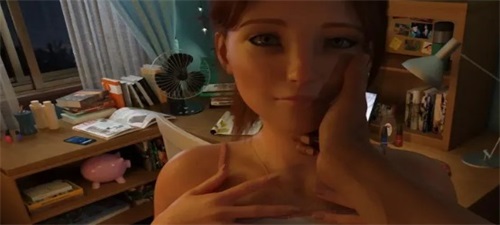

Halfway House drops players into the fragile aftermath of juvenile detention as a nineteen-year-old who must learn to rebuild a life under six months of probation. In Halfway House you move into a rural transitional residence where everyday tasks, awkward social moments, and the slow accumulation of responsibility form the core of the experience. The game focuses on interpersonal storytelling and the small decisions that shape reintegration: managing curfews, following probation rules, attending group meetings, and negotiating the privacy and limits of shared living. While the subject matter is mature, the presentation keeps the tone observational and empathetic rather than sensational.
Halfway House delivers a story-first single-player experience driven by choices and daily routines. Your actions matter: who you speak with, how you spend limited free time, and whether you meet obligations affect relationships with staff and housemates as well as the narrative path. The title emphasizes character development, consequence-driven branching, and moments of quiet reflection rather than action or combat. Expect a contained cast, a set of recurring locations around the house and the nearby town, and a sequence of chapters that unfold across days and weeks in the probation period.
Gameplay blends conversational choice systems with small task-based mechanics that reflect real-world adulting responsibilities. Dialogue options determine tone and reveal background, while time-management sequences ask you to balance chores, work preparation, and self-care. There are low-pressure minigames that simulate tasks like laundry, budgeting basic funds, or completing paperwork; these are designed to be approachable and to reinforce the narrative rather than distract from it. Moral dilemmas and conditional events create branching outcomes, and repeated playthroughs reveal character beats and hidden consequences.
Controls are optimized for touch devices: simple taps to select dialogue or actions, swipe gestures to navigate menus and locations, and contextual on-screen prompts for task minigames. Progression is narrative-first: you unlock new conversation branches, access to certain locations, and deeper scenes as you build trust with housemates or satisfy probation requirements. A straightforward status system tracks non-intrusive metrics such as responsibility, trust, and stability; these metrics influence available choices but are communicated clearly to help players plan their days.
The visual presentation leans into a muted, atmospheric palette with hand-crafted 2D art and carefully framed interiors to emphasize mood and human interaction. The rural setting is shown through quiet exteriors and domestic interiors that change subtly as you personalize them. The game is structured into discrete days and episodic chapters that act like levels: each day brings a set of available tasks, scheduled appointments, and optional interactions. This rhythm supports a slower pace and allows players to absorb character details and environmental storytelling.
Customization in Halfway House is focused on personal items and small comforts rather than complex character builders: you can arrange personal effects in your room, choose clothing that affects impressions in dialogue, and select how you allocate limited time. These choices influence how other characters respond and open alternate scenes. Replay value comes from branching outcomes, multiple endings tied to decisions and relationships, and the ability to pursue different recovery paths during subsequent playthroughs.
The interface emphasizes readability and ease of navigation, with adjustable text sizes, clear subtitles for all dialogue, and optional hints for task sequences. Tutorials are woven into the opening days to introduce mechanics gradually, and autosave checkpoints at the end of each day keep progression simple. The pacing and difficulty are designed to be approachable: players can take time to explore rooms, re-read important dialogue, or skip optional minigame complexity.
Halfway House is built as a single-player, offline-capable narrative game so you can play without a persistent internet connection. Challenges are situational and character-driven rather than score-based: time pressures, conflicting obligations, and interpersonal conflicts create tension and meaningful choice. Because the focus is on story and consequences, the game rewards attention to detail, empathy, and deliberate pacing rather than reflex-based skill.
This description aims to give a clear sense of the tone and systems you will encounter in Halfway House: a quiet, character-driven simulation of reintegration into adult life, centered on thoughtful choices, everyday responsibilities, and the slow work of rebuilding trust and independence.




Naughty Blocks: Operation Strix Compromised
4.2252.63MB

Babe, Live With Me! I Live at My Bros (ILAMB)
4.01017.36MB

Daisy - A Playable Faproulette
4.0364.91MB

Masculinity Test
4.074.36MB

Halls Of Desire
4.0479.12MB

Elara's Mystical Mountain Chalet
4.1381.67MB

Furryville
4.2561.26MB

Prana: The forgotten sin
4.5118.48MB