
Emona – AI Companion & Friend
Version: 1.0.10
24.00MB
4.1

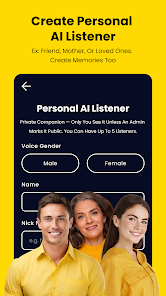

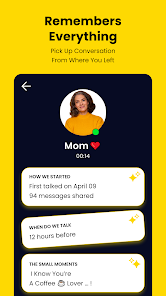



Emona – AI Companion & Friend is a conversational companion app designed to help you feel heard and less alone by combining always-available AI chat with optional access to trained human listeners. This introduction explains how Emona – AI Companion & Friend works, what you can expect from its interaction model, and how its features have been shaped for users in India while maintaining a privacy-first approach.
The core experience centers on a conversational AI that adapts to your style over time, offering a private place to vent, reflect, or talk through everyday stress without judgment. Emona – AI Companion & Friend pairs that AI with a community of trained human listeners who can provide empathetic, non-clinical support when you prefer the warmth of a human response. Conversations are session-based and continuous: you can start a quick check-in, choose a deeper guided conversation, or pick up where you left off because the system remembers context and personal preferences to make future interactions feel more natural.
Interaction controls are deliberately simple: type or speak to the AI, select a conversation mode (for example, check-in, deep talk, or coping strategies), and adjust privacy settings for each session. The app supports text input and voice messages so you can use it hands-free when needed. Personalization comes through memory and preference settings that let the AI recall important details you choose to save, tailor tone and formality, and suggest conversation prompts that match your mood history. Customization options include adjusting response length, choosing a more casual or formal conversational voice, and picking local idioms or Hinglish phrasing to make exchanges feel familiar.
Instead of game-like leveling, progression in Emona – AI Companion & Friend is expressed through emotional tracking and reflective milestones. The app offers tools to record mood trends, reflect on earlier conversations, and set gentle habits such as daily check-ins or thought exercises. Over time these records reveal patterns and small improvements, encouraging repeat use because each session contributes to a clearer picture of your emotional landscape. Saved prompts and favorite conversation threads increase replay value: you can revisit helpful discussions, practice coping techniques, or compare how a situation felt weeks or months earlier.
The interface focuses on calm, readable design with adjustable text sizes, high-contrast themes, and simple navigation so users can find their preferred conversation mode quickly. Visual cues help distinguish between AI responses and human listener replies, and optional sound feedback supports eyes-free use. Accessibility features include screen-reader compatibility, clear labels for navigation, and language options—English, Hindi and Hinglish—that acknowledge local expression. To support limited connectivity, some parts of the app such as viewing previously saved conversations and adjusting local settings work offline, while live chat and access to human listeners require an internet connection.
Privacy is central to the design: conversations are protected with strong data practices and DPDP-compliant policies, and users control what is stored or shared. The platform is intended for emotional support and community listening, not for clinical diagnosis or emergency response. Emona – AI Companion & Friend includes clear guidance about when to seek professional help, and trained listeners follow community guidelines to keep interactions respectful and non-judgmental. Availability of human listeners is community-dependent, so response times can vary.
People use the app for a range of everyday needs: late-night conversations, practicing difficult conversations, getting perspective on stressors like hostel life or family expectations, or simply checking in to manage anxiety and loneliness. The conversational design is meant to feel approachable and steady rather than prescriptive; users can tailor the experience with personalization settings, review their progress through emotion tracking, and choose when to escalate to a human listener. Together, these elements create a supportive routine you can return to as often as you need while keeping control over privacy and the depth of interaction.