InspectPro
Version: 1.4.1.2
30.56MB
4
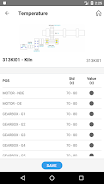




InspectPro is a practical inspection and maintenance utility designed to help factories modernize workflows by allowing teams to scan equipment, record machine status, and plan maintenance with greater accuracy. InspectPro focuses on reducing time spent onsite and improving the clarity of inspection records so managers and technicians can prioritize work with confidence.
The app guides technicians through inspection rounds with a simple touchscreen interface that supports barcode and QR scanning, direct photo capture, time stamps, and short text notes. InspectPro locates assets by ID or by site area, links each observation to the correct machine record, and keeps a concise history of checks so teams can quickly see what was inspected and when. The workflow is linear and adaptable: start a round, scan or select assets, record findings, and mark follow-up actions.
InspectPro includes structured checklists for repeatable inspections, a clear machine-status field for pass/fail or severity grading, and the ability to attach images and short comments to any record. Offline data collection is supported so technicians can complete rounds without a reliable network, with options to export reports later in common formats for review and planning. The app also offers simple filtering and search to find assets by tag, location, or recent activity.
The user interface emphasizes large controls and minimal navigation steps to reduce training time and errors on the shop floor. Actions are driven by taps and scans, with inline inputs for notes and quick photo attachments. Forms are configurable so supervisors can adapt fields to the inspection type, and voice-to-text entry is available where supported by the device operating system to speed up reporting when typing is impractical.
Progress through inspections is tracked per round and per asset, giving teams a clear view of completed checks and outstanding items. Maintenance planners can use inspection histories to prioritize repairs: repeated fault entries raise an asset’s maintenance priority, while successful checks reduce urgency. The app’s history functions create a timeline of inspections that helps in trend analysis and in planning preventive maintenance cycles.
InspectPro presents information with a clean industrial aesthetic: high-contrast labels, color-coded status indicators, and compact lists that scale to large inventories. Sites and production areas are represented as logical sections so teams can break a facility into manageable inspection zones. Asset groups act like levels in a checklist hierarchy, allowing supervisors to run focused rounds for a single line, cell, or building.
Administrators can create and modify inspection templates to match plant-specific procedures, add custom fields, and define acceptable thresholds for measurements. The app supports adjustable font sizes and contrast settings for improved readability in bright factory lighting, and it keeps input layouts simple to reduce cognitive load for users working in noisy or fast-paced environments.
Routine inspections become repeatable tasks that drive continuous improvement: as teams run rounds, data quality and completion speed typically improve. InspectPro supports configurable pass/fail criteria and threshold checks that act as simple challenge controls — for example, a temperature reading beyond a set limit flags the asset and increases its follow-up priority. These mechanics encourage consistent inspection behavior and help teams measure progress over time.
Because factory floors may lack consistent connectivity, InspectPro stores entries locally during offline rounds and provides straightforward export options when a connection is available. Data files are intended for use in maintenance planning, audit trails, and handoff to managers; the app emphasizes clear labeling and timestamps so exported reports show who performed an inspection and when.
InspectPro is built for plant managers, maintenance technicians, and inspection teams that need a focused tool to streamline rounds and improve the reliability of machine records. It fits environments where reliable checklists, clear visual status, and accurate historical logs are more important than full-scale asset management suites, and it works well as a practical, on-the-floor companion to existing maintenance processes.