
Mini Metro
Version: 2.41.0
75.70MB
4.5
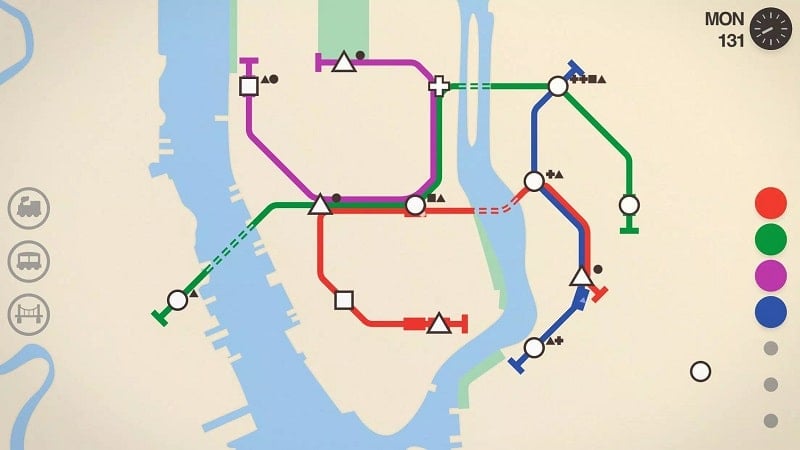
Mini Metro is a minimalist puzzle game that tasks you with designing efficient subway networks across growing cities. Players draw lines between stations, manage trains, and adapt to changing passenger demands. Its simple controls hide deep strategic choices that reward planning, foresight, and quick adaptations under pressure.
At its core, Mini Metro transforms urban transit into a clean, abstract challenge. Each level represents a real-world city with unique geography. You begin with only a few rail lines and must extend the network as new stations appear. The goal is to keep passengers moving without letting any single station become overwhelmed.
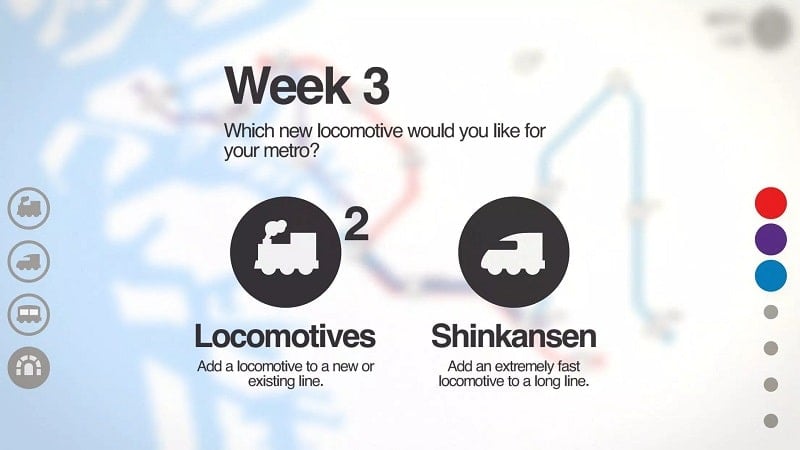
Stations are represented by shapes and passengers display icons indicating their destination type. You connect nodes by drawing lines and assign a limited number of trains and carriages. As the city expands, you receive upgrades such as extra trains, tunnels, or carriages. The game ends when you can no longer prevent stations from piling up with waiting passengers.
Mini Metro rewards thoughtful routing and adaptability. Early choices ripple through a session; a poorly placed transfer or overloaded hub can force a costly reroute. Good players build redundancy, create express branches for high-traffic corridors, and anticipate future station shapes. Over time you learn to prioritize upgrades that match the city’s topology — a tunnel can turn an island problem into a stable loop.
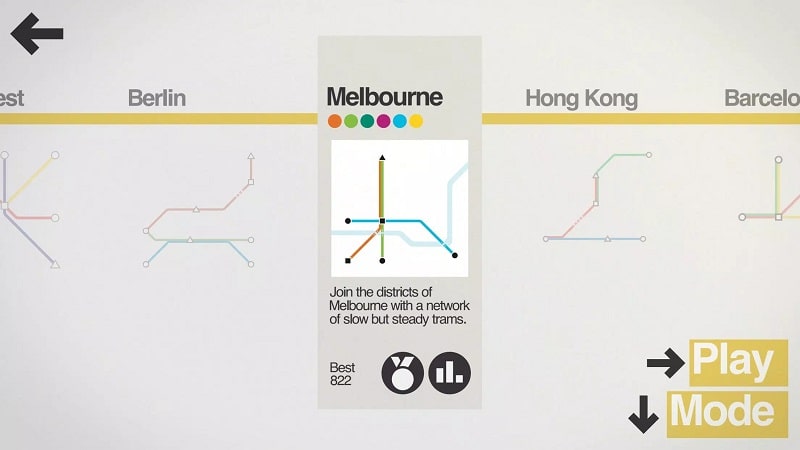
The game’s replayability stems from its procedural generation and subtle difficulty curve. Cities vary in complexity: some demand long cross-town lines, others require frequent transfers between clustered stations. Each map challenges you to rethink common strategies. Sessions are compact enough to play in short bursts but layered enough to support long, focused runs.
Mini Metro uses minimalist graphics and a restrained color palette, which helps players focus on flows rather than flashy effects. Lines are clean and readable even in crowded networks. The soundtrack is calm and rhythmic, complementing the build-and-manage loop and reducing cognitive load during tense moments.
Mini Metro appeals to strategy-minded players who enjoy puzzle systems with emergent complexity. Its balance of accessible controls and deep systemic interactions makes each playthrough feel like designing a living machine. Whether you enjoy chasing a high score or experimenting with efficient layouts, the game offers a steady stream of small design challenges that reward careful thinking and fast decisions.