
Spider’s Foot Hotel
Version: 0.04
280.15MB
4.3
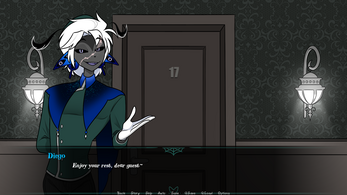

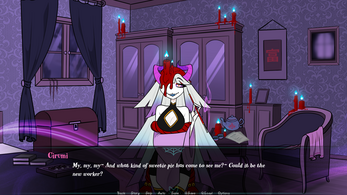
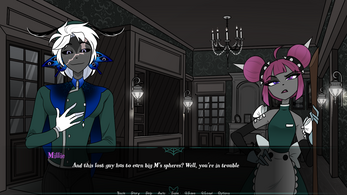
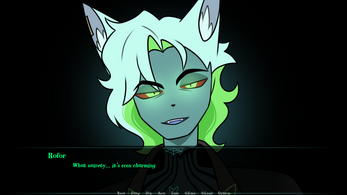
Spider’s Foot Hotel is a compact, atmospheric visual novel demo that drops you into a lonely roadside inn where strange forces and personal choices determine what happens next. In the opening chapter you arrive exhausted, learn that the hotel insists on unusual forms of payment, and must navigate tense conversations, risky decisions and shifting loyalties to try to leave. The demo is aimed at mature players: it leans toward psychological horror, includes some graphic moments and flashing effects, and emphasizes character-driven mystery over action.
Spider’s Foot Hotel focuses on mood, branching narrative and strong voice work rather than jump scares. The demo presents two distinct story threads that introduce five principal characters, each with clear personality differences and potential relationship arcs. English voice acting is included for key scenes and the text is available in English and Russian. The visual approach mixes moody 2D backgrounds, limited character animations and cinematic framing to keep attention on dialogue and atmosphere.
Gameplay centers on reading, choice selection and exploration of conversational paths. Controls are simple and touch-friendly: tap to advance text, tap character portraits to access context options, and choose dialogue or action prompts when they appear. Choices immediately influence short-term events and relational arcs; some options open alternative scenes that are only visible on subsequent playthroughs. The pace rewards attentive reading and pausing to examine clues in the environment rather than continuous rapid progression.
The demo contains the opening chapter and is structured as a series of scenes that branch based on decisions you make. Progression is chapter-based: finishing the demo saves your current state and records key decisions so you can explore different branches without losing prior advances. While only chapter one is available now, the framework is designed to expand into later chapters and DLC that will deepen consequences and long-term outcomes. In the demo, choices primarily affect who you meet, what you learn about the hotel’s demands and which relationships form or deteriorate.
The game uses a deliberately restrained visual language to enhance unease—subtle lighting shifts, layered sprite work and occasional animated effects for emphasis. Voice acting in English brings scenes to life, and the soundtrack leans on ambient textures to underscore tension. For players sensitive to motion, key visual effects and flashing sequences can be minimized through settings, and audio levels for dialogue, music and effects are adjustable independently.
Spider’s Foot Hotel includes several accessibility options to improve readability and comfort: adjustable text size and text speed, high-contrast UI skins for better legibility, and captions for voiced lines. A reduce-motion toggle limits screen shake and animated transitions, and a discrete content warning appears at launch to remind players of mature themes and flashing imagery. These options make the demo more approachable for a wider range of players while preserving the intended atmosphere.
Replayability comes from branching introductions and character responses: the demo’s two initial threads and multiple decision points encourage replays to uncover alternate reactions and early scenes that do not appear on a single run. The challenge is narrative and interpretive rather than mechanical—players face moral dilemmas, negotiation of trust and situational resourcefulness when the hotel’s rules complicate escape. Observant play and different conversational tones unlock new information about characters and the inn itself.
The demo is a single-player experience intended for offline play; once downloaded, it does not require a persistent online connection. File size and performance are optimized for modern Android devices, and a simple save system lets you return to key decision points. Spider’s Foot Hotel is suitable for players who prefer slow-burn storytelling, careful reading and choice-driven drama; if you follow its paths and replay sections, the opening chapter offers a compact but rich taste of what the full release will expand into.