Corruption Quest
Version: 0.2
477.74MB
4.3
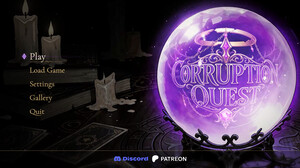
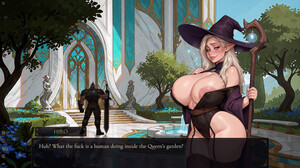

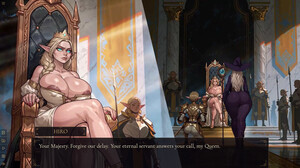
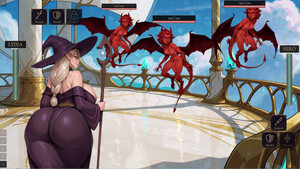
Corruption Quest is a tactical RPG that combines turn-based skirmishes with political maneuvering in a corrupt city-state; this mobile-friendly single-player title focuses on strategic choices, resource management, and emergent narrative consequences while remaining suitable for offline play and local saves. Corruption Quest places equal weight on careful combat planning and out-of-battle negotiation: the decisions you make with faction leaders, merchants, and informants reshape the overworld and unlock new mission routes or hazards. The description below summarizes core mechanics, controls, progression, and user experience so you know what to expect before installing.
Combat in Corruption Quest is turn-based and tactical, emphasizing positioning, ability synergies, and limited resources rather than reflexes. Encounters reward the use of elevation, cover, and environmental interactions to create advantages and funnel enemies into choke points. Outside of combat, a web of faction relationships responds to your choices: supporting one group can close off vendors or open black-market options elsewhere. The game balances set-piece story missions with procedural side encounters so that field actions influence the political map and vice versa, producing emergent outcomes across a campaign.
Character growth extends beyond simple levels. Each character gains skill points to spend in branching trees that support combat roles, subterfuge, or leadership abilities. Equipment upgrades are obtained through crafting and black-market transactions, and the corruption mechanic offers additional perks at a cost: choosing certain corrupting influences grants powerful boons but can alter faction standing and long-term campaign options. Squad composition and passive bonuses tied to reputation encourage experimentation and a variety of playstyles, allowing you to build tanks, controllers, or versatile hybrids depending on strategy.
The interface is optimized for mobile screens, with radial ability menus, quick-access bars for consumables, and contextual tooltips that explain status effects and faction modifiers. Touch targeting and movement are responsive, and gesture shortcuts help speed up repeated actions. Settings include control sensitivity and accessibility options so you can tweak input behavior, HUD density, and tooltip verbosity. Menus and prompts are designed to minimize clutter during combat while keeping essential information visible for tactical planning.
The city-state setting mixes narrow alleys, opulent mansions, industrial ruins, and mutated zones to create varied mission backdrops. Story missions are handcrafted to deliver narrative beats, while procedural side content introduces randomized objectives, secret vendors, and small encounters that can shift faction reputations. Maps are designed with verticality, interactive objects, and environmental hazards that reward creative ability use, and exploration commonly reveals hidden quests and lore entries that deepen the campaign’s themes of decay and power.
Multiple difficulty settings and optional challenge modifiers let you scale the tactical depth and resource pressure to your preferred level of challenge without changing the game’s core systems. The interplay between political choices and battlefield decisions produces multiple endings and branching paths, which, together with randomized events and diverse corruption options, encourage replaying campaigns to try different moral stances and team builds. Emergent stories arise when faction reactions and combat outcomes interact, giving each playthrough distinct moments worth revisiting.
Visually, Corruption Quest balances stylized character designs with gritty environmental detail to illustrate the contrast between power and decay. Lighting and particle effects highlight magical and corrupting abilities in combat, while performance settings allow you to scale textures, shadows, and particle complexity for older hardware. Load times are optimized for quick mission retries, and the game aims to maintain stable frame rates across a range of devices through adjustable quality presets.
Starting a campaign is straightforward: choose a starter archetype that matches your intended approach, complete opening missions to learn core mechanics, and invest early skill points into survivability and utility. Pay attention to faction reputations from the outset and accept side tasks that broaden future options. Try one or two corruption paths early to understand their immediate benefits and long-term tradeoffs, upgrade equipment regularly, and diversify your roster to prepare for late-game threats. Corruption Quest rewards planning and adaptation over button-mashing.
Designed for individual play, Corruption Quest supports offline progression and stores local saves so you can continue a campaign without a constant network connection. Accessibility options include adjustable text sizes, contrast-friendly UI elements, and input sensitivity controls to accommodate different player needs. The HUD and tutorial pacing aim to reduce friction for new players while offering depth for those who enjoy long-term strategic planning and experimentation.