حروفي المرحة
Version: 1.0
34.70MB
4
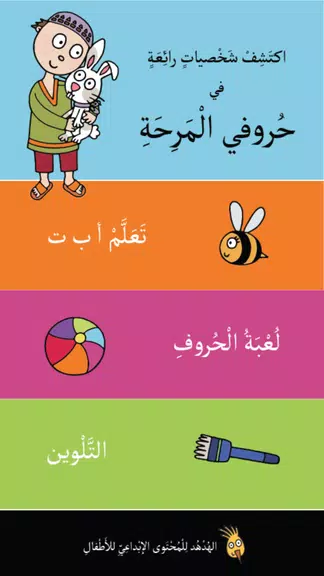
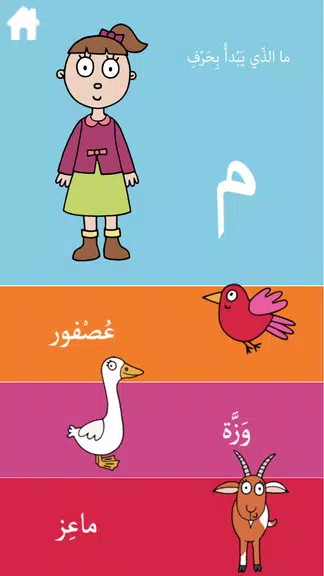
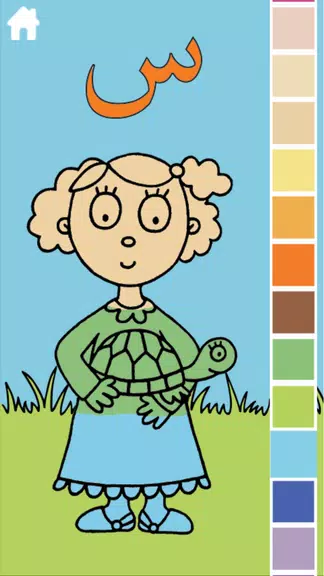
حروفي المرحة is an educational Android app designed to introduce young learners to the Arabic alphabet through short, guided activities that combine clear audio, touch tracing, and playful reinforcement. حروفي المرحة places letters in simple, repeatable learning loops so children can develop shape recognition, correct pronunciation, and basic writing strokes at their own pace while caregivers and teachers monitor progress. The first session focuses on one letter at a time with vocal modeling and a gentle tracing tutorial to establish confidence.
This app is intended for preschool and early-primary children, classroom aides, and families who want a structured, modular introduction to Arabic literacy. Lessons break down letters into isolated forms and demonstrate how each letter appears in initial, medial, and final positions. Teachers will find it easy to select modules to match classroom sequences, and parents can use short sessions to reinforce what a child is studying in school. The design supports repeated micro-sessions that fit into daily routines.
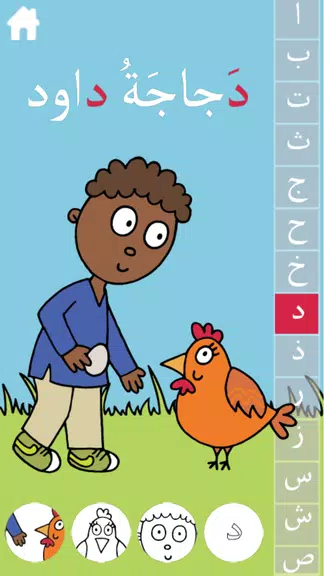
Gameplay centers on an audio-visual loop: a recorded pronunciation cue, a visual example with a contextual image, and an interactive tracing task that reinforces both form and sound. Mini-games provide varied practice—matching letters to pictures, listening for a sound and tapping the correct shape, or choosing the right letter to complete a simple word. Activities are intentionally brief and repeatable so each interaction feels like a small success, encouraging steady progress without overwhelming young users.
Controls are optimized for touch screens with large tappable icons, drag-and-drop tiles for matching exercises, and guided tracing lanes that respond to finger or stylus input. The tracing feature gives immediate visual feedback and subtle correction if a stroke is missed, plus an undo gesture so learners can try again without penalty. Menus and navigation use clear icons and minimal text so emerging readers can explore independently.
The learning path moves from recognition to production in small steps: listening and pointing, guided tracing, and contextual examples that show letters in simple words. Progress is measured by completed modules and milestone badges representing mastery of individual letters. Modules are intentionally modular and short to allow teachers and parents to reorder them for targeted practice, to focus on trouble letters, or to scaffold learning across several sessions.
Multiple learner profiles keep progress records separate for siblings or classroom stations. Caregivers can customize lesson order, adjust mini-game difficulty, and change narration speed to match a child’s processing needs. Volume controls and a simple settings panel allow educators to adapt the experience for group use or quieter home environments without changing the core lesson flow.
The visual design favors bright but uncluttered screens with high-contrast letterforms and large icons suited to small hands and developing eyesight. Illustrations are simple and contextual to the target words, helping children link letters with familiar objects. Animations are brief and informative to support learning rather than distract, and interface elements are spaced to prevent accidental taps during tracing and matching activities.
Accessibility is built in: full audio guidance reduces reliance on reading, color-contrast options assist visibility, and adjustable narration speed supports varying processing rates. The app avoids dense text and uses clear pictograms so non-readers can navigate. Feedback is encouraging and non-punitive, promoting persistence and reducing frustration for early learners or those who need extra time.
Most activities run offline after the first install so lessons remain available without a continuous connection. The app is optimized for low- to mid-range devices with modest file size and efficient animations to ensure consistent performance on older Android phones and tablets commonly used in homes and classrooms. Audio and graphics are compressed for reliability while maintaining clarity for learners.
Replayability comes from adaptive hints and incremental challenge: tracing exercises progressively introduce more precise stroke guidance as a child improves, and mini-games cycle through varied item sets and categories to avoid repetition. Short session design and repeatable practice support long-term mastery while allowing caregivers to increase challenge when appropriate.
Basic parental controls allow limits on session length and lock settings to prevent accidental changes. Progress data is stored locally per profile to minimize personal data collection; privacy settings emphasize saving learning records rather than sharing identifiable information. Any in-app purchases are protected behind confirmations and can be disabled by caregivers.
Setup is straightforward: install the APK, grant permission for audio playback, and create one or more learner profiles. Teachers can preconfigure module sequences for a class or let students work at individual stations. For schools with limited connectivity, حروفي المرحة offers compact downloads and offline lessons that make it practical for classroom rotations and home reinforcement, supporting consistent practice even when internet access is intermittent.