Bratty Thief Saves the World?!
Version: 1.0
0.01MB
4.4
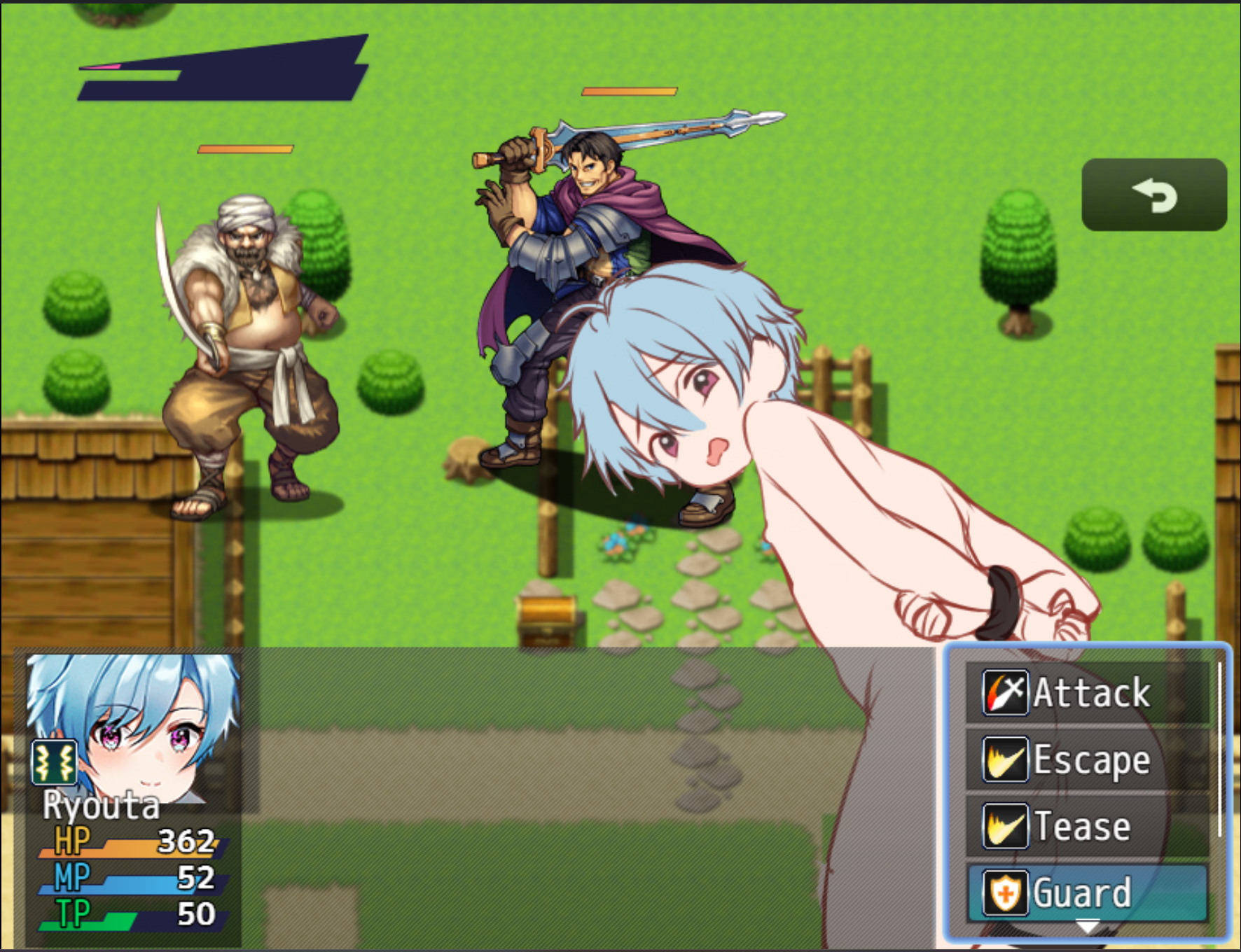
Bratty Thief Saves the World?! places you in the role of Ryouta in a compact, mature-themed turn-based RPG that blends tactical encounters with branching narrative decisions. The game frames a morally ambiguous protagonist forced to cope with a witch's curse while balancing combat, conversation, and meaningful choices that alter relationships and endings. This editor overview highlights core systems, controls, and design goals so you can quickly understand what the experience offers.
Bratty Thief Saves the World?! merges grid-like tactical battles with interactive story beats where dialogue and social checks can change outcomes as much as a well-placed attack. The game emphasizes character-driven scenarios, hand-drawn portraits, and expressive art that supports tone over explicit imagery. Each encounter can be approached through direct combat, environmental interaction, status effects, or persuasive dialogue, giving multiple viable solutions to the same problem.
Combat is deliberate and tactical: players manage action points, position Ryouta in encounter zones, and choose from offensive, defensive, or utility skills. Status effects have layered interactions—poison, stun, and morale shifts can be combined with terrain and object use to create openings. Outside fights, ability checks influence scene outcomes so a high-charisma approach can bypass a battle while stealthy or aggressive builds unlock different tactical options in the same encounter.
The mobile interface was designed for touch-first play with straightforward tap-and-drag movement and simple skill targeting. Menus for inventory, abilities, and progression prioritize clear tooltips and readable icons so newcomers can learn quickly while advanced players plan deeper setups. Adjustable animation speed and dialogue pacing let you tailor the tempo of sessions, and contextual prompts explain new mechanics as they appear to reduce friction during the first hours.
Progression focuses on meaningful choices rather than overwhelming complexity: Ryouta unlocks active abilities and passive upgrades that shift how encounters are resolved. Skill points can be invested to emphasize direct combat, subterfuge, or social influence, and modest equipment options change playstyle without extensive micromanagement. Consumables and situational items encourage creative problem-solving, and certain story decisions open unique upgrades or portrait states that reflect Ryouta's development.
The game features hand-drawn character art and expressive portraits created by the lead developer, producing a unified look that highlights mood and personality. Visuals prioritize clarity in battle with distinct icons and readable fonts, and close-up art appears during critical narrative beats to emphasize emotion rather than explicit content. Audio cues and a restrained soundtrack support atmosphere and do not intrude on player decisions.
Encounters are built as short missions and narrative set pieces that advance the main story or provide optional side scenarios. Difficulty scales gradually to introduce mechanics, and the design allows revisiting areas to pursue alternate paths. Boss and scripted fights require pattern recognition and full use of Ryouta's tools, while optional challenges offer steeper tests for players seeking higher difficulty and tactical depth.
Choices matter: the central curse and Ryouta's responses create branching paths and multiple endings that reward replay. Alternative approaches—confrontation, evasion, or persuasion—change relationships and unlock different scene variations. Hidden events and unlockable portrait states encourage exploration of dialogue branches and tactical experimentation, giving the game replay value without relying on grind-heavy mechanics.
The title supports offline play with a simple save system that makes it easy to pause and resume on the go. Accessibility settings include adjustable text size, pacing preferences, and difficulty options that accommodate a wide range of players. In-game tooltips, clear UI contrast, and assistive pacing reduce the learning curve for new tactical players while letting veterans tailor challenge and speed.
This indie project, Bratty Thief Saves the World?!, reflects the work of a solo creator known as Ryouta who handled design, coding, and most of the artwork. That concentrated development approach gives the game a consistent artistic voice and focused narrative priorities, offering a compact RPG experience built around choice, tactical thinking, and hand-crafted presentation rather than spectacle.