Thronefall
Version: 2.12.10
197.20MB
4.2
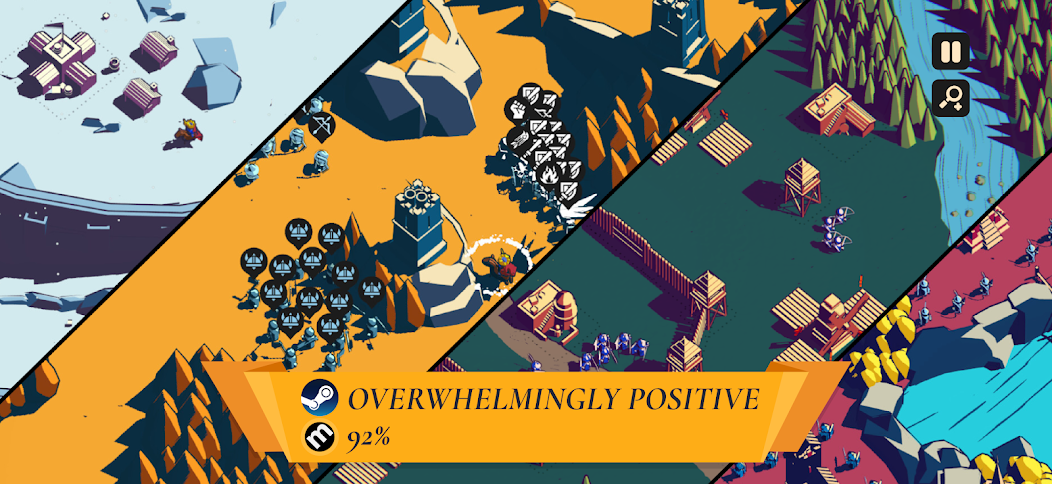
Thronefall is a compact tower-defense meets kingdom-sim that challenges players to defend a throne while managing villagers and resources. This strategy game blends quick tactical battles with base-building decisions, offering bite-sized levels that reward planning, upgrades, and clever use of units across escalating waves of foes.
At its core, Thronefall condenses complex strategy into short sessions ideal for mobile play. Each run pits you against multiple enemy waves; when combat ends, you shift to recovery and rebuilding. The cycle is tight, making choices meaningful: invest in defenses, recruit workers, or strengthen the throne’s standing.
Combat is fast and tactical. You assign units, upgrade towers, and position defenses to intercept attackers. Villagers perform dual roles: gathering resources and becoming improvised defenders when needed. The transition from resource management to frontline command gives the gameplay a rhythmic pulse that keeps attention sharp.
The progression model in Thronefall favors incremental growth. Wins unlock new structures and persistent upgrades, while losses offer lessons in deployment and timing. Progress feels earned because each upgrade alters how you approach the next encounter, encouraging experimentation with different loadouts and priorities.
Units range from basic spearmen to heavier defensive squads, each with strengths and weaknesses. Buildings include resource collectors, production hubs, and defensive towers that can be upgraded or specialized. Levels present distinct choke points and terrain features; adapting your strategy to the map is essential for consistent success.
Effective play hinges on balancing short-term survival with long-term growth. Early waves often punish neglect; investing in worker capacity can yield larger returns later. Use scouts or fast units to manage flankers, and reserve powerful but costly abilities for critical moments. Timing and foresight separate routine victories from hard-fought triumphs.
The interface surfaces key systems without overwhelming the player. Resource meters, upgrade trees, and cooldown indicators are clearly presented. The game nudges strategic choices through simple tooltips and concise feedback, so learning is swift and friction is low.
Graphically, Thronefall favors readable, stylized art that prioritizes clarity during hectic moments. Characters and structures are distinct, which helps in rapid targeting decisions. Sound design underscores action with satisfying effects and a soundtrack that scales intensity based on battle conditions.
Controls are tailored to touch screens with drag-and-drop unit assignment and tap-to-upgrade mechanics. Menus remain accessible, and session length is adjustable to fit casual play. The game balances depth with accessibility so newcomers can pick up the basics quickly while veterans can dive deeper into optimization.
Those new to Thronefall should experiment with different building orders and unit compositions. A few runs will reveal synergies that match your play style and preferred difficulty.
Thronefall carves its niche by merging micro-level combat decisions with macro-level base management in short, satisfying stages. It’s approachable, yet it offers enough depth for strategic planning and replayability. The pacing and clear feedback loop make every session feel cohesive and rewarding.
Install the app, complete a brief tutorial, and jump into the first campaign missions. Focus on building a stable income stream and a reliable frontline. As you unlock upgrades and structures, adapt your tactics to the evolving challenges. With steady improvement, the throne becomes harder to topple.
Overall, players looking for a condensed strategic experience with tangible progression and quick sessions will find Thronefall compelling. It delivers tactical satisfaction without demanding long time commitments, making it a strong choice for strategy fans on the go.