
The Last Challenge
Version: 0.1.3
455.75MB
4.4
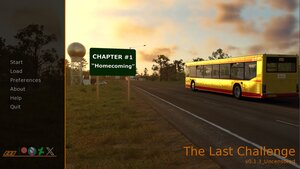



The Last Challenge is a compact, skill-focused action game built around short, intense encounters that challenge reflexes, pattern recognition, and tactical decision-making. Designed for players who enjoy repeated runs and gradual mastery, The Last Challenge emphasizes precise control, a curated set of modular upgrades, and tightly designed arenas rather than sprawling maps or lengthy resource grinding.
The core idea is simple: put the player into a series of contained arenas where moment-to-moment choices matter. Encounters are deliberately concise to keep matches fast and replayable, with difficulty that scales through enemy behavior, environmental hazards, and modifiers rather than endless stat inflation. This structure makes each attempt feel meaningful; failures teach specific lessons about timing and positioning that carry into the next run.
Gameplay revolves around reading enemy telegraphs, adapting weapon loadouts, and exploiting the geometry of each arena. Enemies present distinct patterns and predictable cues, so success is less about raw upgrades and more about recognizing sequences and preparing counters. Environmental objects, movable cover, and timed hazards interact with combat in ways that reward spatial awareness: a well-timed dash can turn a hazard into an advantage, while holding ground in the wrong moment can be punished sharply.
Control responsiveness is a priority, with touch input tuned for low latency and optional support for external controllers on compatible devices. Movement, aiming, and special abilities are designed to feel immediate so that skilled players can rely on muscle memory. The game targets clear visual communication over excessive detail to preserve readability during hectic moments and to maintain smooth frame pacing on a wide range of hardware.
Progression is built around modular upgrades and a meta-progression system that preserves some unlocks between runs. Players earn new gear and character options by completing objectives rather than by passive playtime, which keeps advancement purposeful. Characters offer a primary ability and a secondary trait that shift playstyle—for example, improving mobility versus increasing damage output—so experimenting with combinations yields distinct approaches to the same challenge.
Each arena is crafted to highlight particular mechanics: some favor vertical movement, others emphasize choke points and area denial. Rather than one-size-fits-all levels, map variations introduce new tactical considerations and force players to adjust their loadout and movement strategy. The game includes multiple difficulty tiers and optional challenge modifiers that raise stakes for experienced players, but permadeath is not the primary progression driver; instead the design rewards persistence through unlocks and practice.
The visual style prioritizes readable silhouettes and contrast so enemies and hazards are easy to identify at a glance. Effects for hits, cooldowns, and pickups are kept simple and informative to avoid clutter during fast sequences. Audio cues are similarly functional: distinct sounds signal enemy actions, incoming threats, and item interactions, helping players react quickly without relying solely on visuals.
Options for difficulty, input sensitivity, and control layout help accommodate different play styles and hardware setups. Visual clarity and adjustable feedback settings aim to make the game approachable for newcomers while preserving the precision demanded by advanced players. The interface remains minimal to reduce distraction and to keep attention on core gameplay decisions.
Replayability comes from modular upgrades, varied arenas, and a learning curve that rewards pattern recognition and timing. The Last Challenge supports offline play once installed so you can practice runs without an active connection. New players should focus on learning enemy telegraphs, trying mobility options early to create space, and experimenting with characters to find a comfortable tempo. Short, deliberate practice sessions build muscle memory and make improvement feel tangible.
Installation is straightforward and the in-game tutorial introduces the basic movement and attack systems before you tackle the beginner arena. Start on lower difficulty to learn common enemy sequences and gradually increase challenge as you refine your loadout and strategies. With concise encounters and a clear feedback loop, The Last Challenge is designed to reward steady improvement and inventive tactics over time.