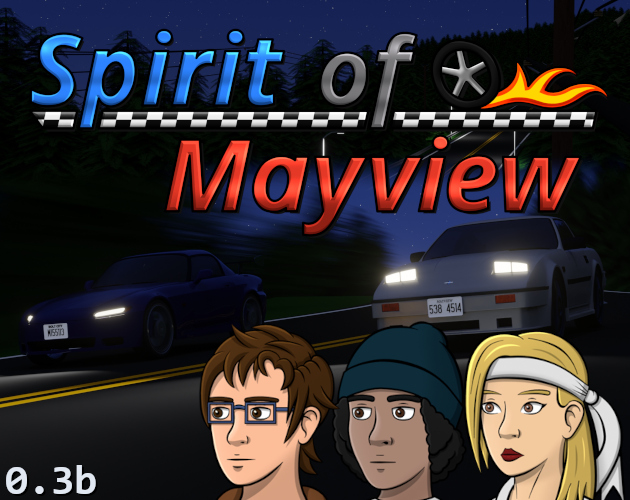
Spirit of Mayview
Version: 1.0
617.08MB
4.5
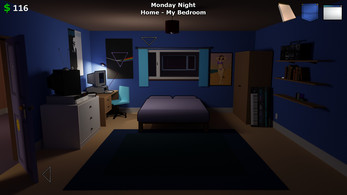

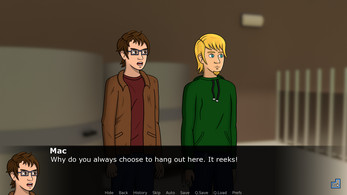

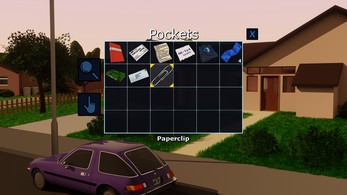
Spirit of Mayview is a moody narrative-driven adventure that blends stealth, exploration, and puzzle-solving in a haunted small town. Players unravel mysteries, evade supernatural threats, and restore balance to Mayview through careful investigation, resource management, and tense decision-making, all supported by rich visuals and immersive sound.
At the heart of Spirit of Mayview is an investigative loop: explore locations, gather clues, solve environmental puzzles, and escape or confront the manifestations that stalk the night. Encounters emphasize avoidance and clever use of limited tools rather than direct confrontation. Each session rewards careful observation and methodical planning.
Progression in Spirit of Mayview is non-linear. Rather than leveled experience, advancement comes from unlocking new areas, piecing together the town's history, and gaining allies or enemies through dialogue options. Decisions influence both immediate outcomes—such as the state of a character or an area—and long-term story arcs that culminate in varied conclusions.
The game presents a compact but richly detailed town map with a mix of interior and exterior locations: an abandoned school, a foggy waterfront, a shuttered hospital, and hidden basements. Each area has its own hazards and lore fragments. Environmental storytelling is used heavily, with readable notes, visual cues, and subtle changes to familiar spaces as the story progresses.
Confrontation in Spirit of Mayview is deliberately risky. Players rely on distractions, hiding spots, and improvised devices to bypass threats. The toolkit encourages creative problem solving: tape over sensors, throw objects to create noise, or use limited light sources to reveal hidden sigils. When conflict is unavoidable, quick decision windows and context-sensitive actions determine survival.
The cast includes local residents with layered backstories, spectral entities tied to Mayview’s past, and a protagonist whose own memories influence investigations. Dialogue is designed to reveal personality and motive, and optional side encounters deepen the narrative for players who dig into optional objectives. Character relationships affect access to information and can alter mission routes.
Visual presentation leans into moody lighting and stylized textures to create a claustrophobic, uncanny tone. Animations emphasize subtle movements and environmental changes that raise tension. Sound design plays a major role: directional audio cues warn of approaching danger, ambient layers shift with player progress, and a restrained score underscores pivotal moments.
Controls are streamlined for touch screens and controllers, with intuitive gestures for searching, hiding, and interacting with objects. The interface keeps HUD elements minimal to preserve immersion. Optimization focuses on consistent frame pacing on a range of devices, while graphical settings allow adjustments for older hardware.
Spirit of Mayview offers a tense, story-rich experience that rewards curiosity and careful play. Its mix of stealth, environmental puzzles, and branching narrative makes each playthrough feel deliberate and personal, encouraging multiple visits to uncover everything Mayview hides.