My PlayHome School Mod
Version: 3.5.2.23
53.82MB
4.2
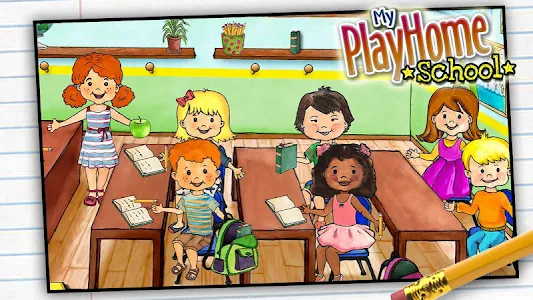
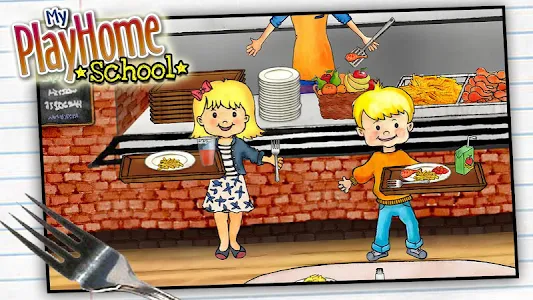
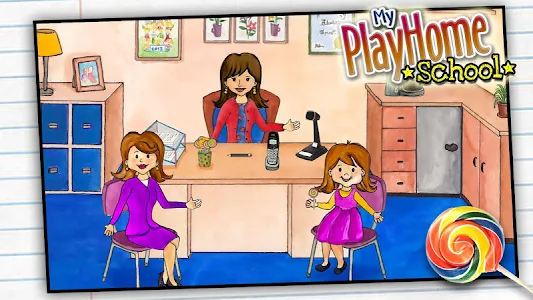
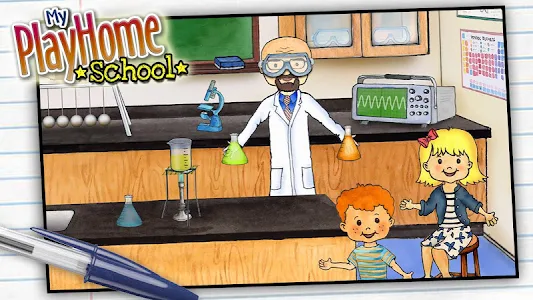
My PlayHome School Mod offers a dollhouse-style, open-ended simulation set in a fictional school environment where players control avatars to lead lessons, run simple science experiments, and share meals in a campus café. My PlayHome School Mod emphasizes freeform exploration rather than fixed goals, providing a relaxed sandbox with no scores, timers, or forced progression so each session can be driven by imagination and personal objectives.
The app presents a compact school world with multiple themed rooms including classrooms, a science lab, a small café, and outdoor play areas. Each scene is designed as a tactile space that players can explore at their own pace, open cupboards, move furniture, operate simple devices in the lab, and arrange communal activities in the café area.
Role switching is fluid and intentional: users choose which avatar to control and can change roles during play to try different perspectives. These characters are fictional avatars with expressive reactions and basic routines that respond to user interactions, creating a lively and predictable simulation rather than a goal-oriented game.
Controls are optimized for touch screens with straightforward gestures like tap, drag and drop, and simple context menus. The interface focuses on large targets and minimal text to make navigation intuitive across a range of screen sizes, from phones to tablets. Interaction feedback is visual and auditory so actions feel clear without requiring complex instructions.
Customization options let players personalize avatars and scenes with costume changes, room decorations, and rearranged props. These cosmetic adjustments encourage replay by allowing different visual storytelling choices each time, and they help users build unique setups before running scenes or experiments.
Integration with other titles in the same series is supported so players familiar with related PlayHome apps can move between familiar locations and assets when available. This expands the playable universe without introducing online or competitive features, keeping the experience self contained and focused on local creative play.
The core loop is exploratory and emergent rather than level based. Progression happens through discovery and creative milestones set by the player, such as completing a series of pretend lessons, finishing an in‑app experiment sequence, or assembling a themed scene. Optional collectible props and scene elements can be found by exploring different rooms, which encourages repeat visits to the same locations with new goals.
Challenge systems are gentle and optional. Instead of timed puzzles or leaderboards, the app offers small cause and effect scenarios in the lab and classroom that invite experimentation. Players can try different combinations of objects and observe predictable outcomes, which supports iterative learning and curiosity-driven play.
The visual presentation is bright and toy-like, with clear outlines, saturated colors, and friendly animations that emphasize readability and mood. Characters and props are stylized to resemble dolls or models, reinforcing the fictional and imaginative quality of the environment. Sound design uses simple cues and ambient music to support actions without overwhelming the scene, and audio levels can be adjusted in the settings for quieter play.
The design prioritizes straightforward interactions and accessibility. Large touch targets, short text prompts, and predictable responses help users of varying experience enjoy the app. Control hints and optional tooltips appear contextually to guide first-time users, and the straightforward layout reduces cognitive load for open-ended sessions.
My PlayHome School Mod is intended for offline play and does not require a persistent internet connection for core features. This makes it suitable for travel, low connectivity situations, or use where online access is limited. Local device performance is considered in the visual assets so the app runs smoothly on a broad range of hardware.
Replay value comes from sandbox possibilities, avatar and scene customization, and optional discoveries scattered through the school environment. Because there are no fixed objectives, players who enjoy open storytelling and imaginative role-play will find many ways to return to the app. Changing costumes, rearranging rooms, and trying different experiment setups renew the experience each time.
Potential limitations to consider are intentional and design driven. Players seeking structured progression, competitive elements, or complex mechanics may find the experience too relaxed. The app focuses on imaginative simulation rather than puzzles or rigorous educational systems, so expectations should align with creative free play rather than achievement tracking.