
Neuvau
Version: 1.06.01
277.00MB
4


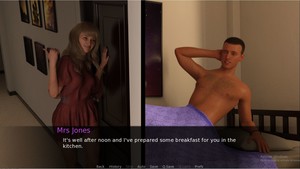

Neuvau is a narrative-driven single-player experience that places you in the shoes of a shy post-graduate staying with a family friend who wakes after an unexpected night out to discover his routine unsettled by an encounter with a mysterious woman. Neuvau focuses on mood, character, and the slow unraveling of a private life as players follow the protagonist's struggle with shyness, control, and the social ripple effects of a single night. The introduction establishes tone and stakes, and early choices set the course for how relationships and internal conflict will develop.
The core gameplay in Neuvau emphasizes story exploration and consequential choices rather than action or complex mechanics. Players progress through discrete scenes and chapters, selecting dialogue lines, deciding whether to approach or withdraw in social situations, and choosing small actions that influence character reactions. Mechanics are intentionally simple and accessible: tap-based selection for dialogue and scene choices, contextual taps to examine objects or trigger short interactive moments, and occasional timed decisions that introduce soft pressure during tense encounters. Progression is chapter-based, with each chapter resolving a part of the mystery while opening new emotional threads and character details.
Controls are optimized for touch devices: clear on-screen options, a minimal HUD to avoid distracting from the narrative, and intuitive gestures for navigation between scenes. Save and checkpoint systems allow players to return to specific scenes to explore alternate choices, and a chapter menu makes it easy to replay sections to see different outcomes. Progression unlocks additional narrative context and optional scenes rather than power-ups or traditional leveling. The pacing supports both short sessions and longer play periods, so you can advance a scene in ten minutes or immerse for an extended session.
Neuvau uses an atmospheric visual style that supports the game's introspective tone: moody lighting, muted color palettes, and character-focused composition that emphasizes facial expressions and body language. Locations are compact and deliberately chosen — the family friend's apartment, a local café, neighborhood streets, and a few interior spaces — each chapter concentrates on a handful of locations to keep the story intimate and focused. Scenes function like short vignettes, combining visual storytelling with dialogue and ambient sound to build mood. This compact structure reinforces emotional immersion without overwhelming the player with unnecessary environments.
While Neuvau does not offer deep character customization, it lets players shape the protagonist's responses and reputation through choices, which effectively customizes the narrative experience. Multiple endings and branching scenes encourage replay: subtle decisions early on can unlock hidden conversations or alternate resolutions. Challenge elements come from social and emotional mechanics — managing the protagonist's anxiety in certain interactions, making timely choices under pressure, and balancing honesty with self-protection. These soft challenge systems reward observation and careful decision-making rather than reflex-based skill.
The user experience is designed for clarity and comfort: readable text sizes, adjustable subtitle options, and simple navigation controls help reduce cognitive load during dialogue-heavy scenes. Accessibility options include adjustable text scale and contrast modes to support players with visual or reading challenges. Neuvau supports full offline play, so you can experience the story without an internet connection once the game is installed. Touchscreen responsiveness is tuned for a wide range of devices, and the game keeps a small footprint to run smoothly on typical Android hardware.
Neuvau's strengths lie in its focused, character-driven storytelling, intimate atmosphere, and the emotional weight carried by player choices. The narrative emphasis creates a memorable experience for players who appreciate slow-burn drama and nuanced interpersonal scenes. Limitations are deliberate: the pace is introspective and may not satisfy players seeking fast action, and gameplay variety is concentrated around choices and scene exploration rather than complex mechanics or mini-games. The game is best enjoyed by players who prefer mood, character, and consequence over high-energy gameplay loops.