
Forever My Girl
Version: 0.50
237.20MB
4.1
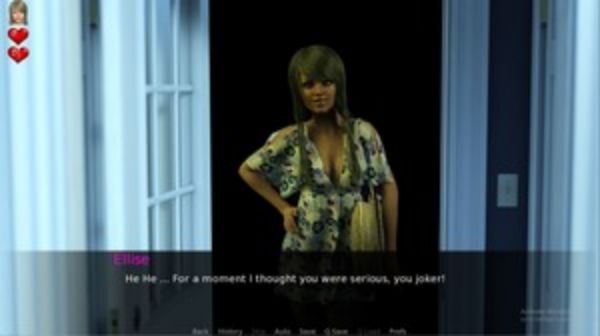
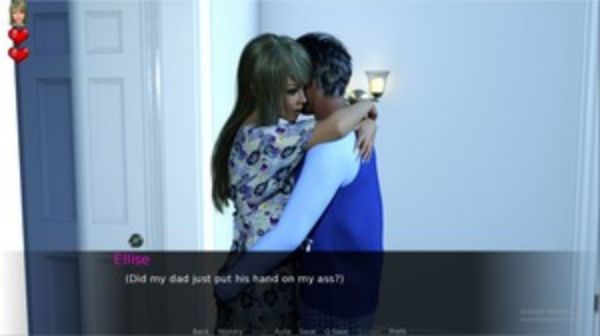

Forever My Girl is an indie narrative game that invites players into a slow-burning, character-driven story about two adults with a complicated history and a changing emotional connection. Forever My Girl focuses on quiet interpersonal moments, moral ambiguity, and the consequences of difficult choices rather than on action or arcade-style challenges, offering a contemplative experience aimed at players who appreciate nuanced storytelling and mature themes handled thoughtfully.
The core of the experience is dialogue and scene-based interaction: conversations shift the tone and direction of the plot, environmental details reveal backstory, and brief interactive sequences emphasize mood over mechanics. Players make decisions that influence how the central relationship develops and how other supporting characters respond, leading to branching narrative threads and several possible outcomes. The game treats its subject matter with restraint and focuses on emotional realism, avoiding gratuitous content while engaging with complex feelings and social boundaries.
Gameplay is intentionally accessible: most interactions are handled through point-and-click exploration and choice-driven dialogue menus. Controls are streamlined for touch screens and mouse input, with clear prompts and a responsive interface that keeps focus on reading and decision-making. Short interactive vignettes punctuate conversations—these may require simple taps or clicks to progress, frame a memory, or select a particular line of dialogue. A built-in journal tracks major choices and key revelations, helping players follow the narrative without interrupting immersion.
The story unfolds across a series of chapters that blend present-day scenes with flashbacks and environmental storytelling. Progression is non-linear at times: certain choices unlock deeper scenes or alternative character perspectives, and revisiting locations can reveal new dialogue options. There is a clear sense of progression as relationships evolve and previously hidden motivations come to light. Save points are frequent and the game supports multiple save files so players can explore different decision paths without losing earlier progress.
Replayability is a central design goal. Because choices accumulate and interact, replaying with different approaches uncovers new character beats and alternate resolutions. Multiple endings reflect the variety of paths players can take, from reconciliation and understanding to more ambiguous or difficult outcomes. The game encourages thoughtful replays to see consequential story branches and to experience the full emotional range of the narrative.
Forever My Girl presents a restrained visual aesthetic typical of many indie narrative projects: intimate, hand-crafted 2D scenes, a focus on facial expression and body language in character portraits, and carefully composed backgrounds that highlight mood and thematic details. The soundtrack is minimalist and designed to underscore emotional beats without overpowering dialogue. Subtle animation and lighting shifts help indicate emotional tone while keeping the emphasis on writing and character interaction.
The game includes basic accessibility options to broaden usability: adjustable text size, subtitle toggles, and alternative contrast modes for clearer visuals. Controls can be remapped to suit different devices and personal preferences. These features are intended to make the experience more approachable for players with diverse needs while preserving the narrative pacing and authorial intent.
Designed as a single-player, offline experience, Forever My Girl does not require an internet connection to play after installation. The game is optimized for modest hardware and aims for smooth performance on typical Android devices; graphic settings can be scaled down to improve frame rate on lower-end models. Offline play ensures players can revisit the story anytime, without relying on online services.
Created by an independent developer working under the name mr. HappyMo, Forever My Girl reflects an auteur approach to storytelling: a focused creative vision, personal themes, and small-team production values. The developer emphasizes careful writing and player agency, and the project is intended for a mature audience that values psychological nuance over spectacle. Fans of thoughtful visual novels and narrative adventures may find this game a distinct and introspective offering.