Lesley Jeane and Crystal Skull
Version: 1.0
103.32MB
4.2
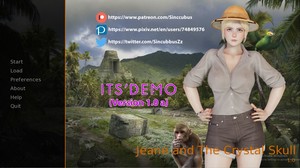
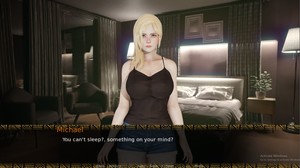
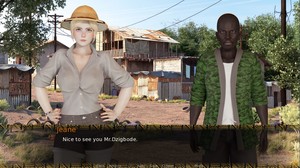
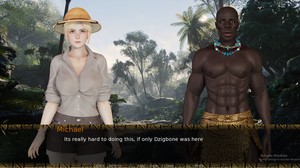
Lesley Jeane and Crystal Skull places you in a tightly written, single-player adventure about an anthropologist caught between the lure of a priceless artifact and the ethical weight of a community's traditions. In Lesley Jeane and Crystal Skull you take the role of Jeanne as she tracks clues through dense jungle, learns local histories, negotiates with protectors of the skull and makes choices that ripple through the story. The game emphasizes atmosphere, moral friction and careful exploration rather than fast-paced combat, delivering a compact narrative experience that invites reflection as much as problem solving.
The experience centers on exploration, negotiation and consequential decision making. Players move through layered scenes to uncover environmental clues, engage in branching conversations with villagers and manage limited resources that affect both immediate survival and long-term relationships. Dialogue options are designed to reflect different approaches—sympathetic, transactional or forceful—and the game responds to those approaches with changing access to locations and new story branches. The pacing keeps scenes purposeful and meaningful, prioritizing choices that shape Jeanne's reputation and the community's willingness to cooperate.
Play is optimized for touch devices with simple, responsive controls: tap to move Jeanne through the environment, tap interactive objects to examine or collect them, and choose dialogue responses from a clear on-screen menu. Many interactions rely on contextual prompts rather than long menus, making it straightforward to investigate ruins, read entries in a field journal, or present evidence during negotiations. Puzzle elements are integrated into the exploration rather than tacked on; solving a territory puzzle or offering the right concession in conversation can open new paths without requiring dexterity-based input.
Progression is narrative-driven rather than experience-point based. Advancement comes from unlocking scenes, winning the trust of characters, and making decisions that alter accessible story beats. A compact reputation and consequence system tracks Jeanne's standing with different groups, influencing available dialogue lines, quests and the final resolution surrounding the skull. The game includes a journal that records discovered lore, useful clues and past conversations so players can make informed choices as the story develops.
Visually, the title leans into moody, realistic environments: tangled foliage, weathered artifacts and the interplay of light and shadow in dense jungle clearings. The art direction favors texture and atmosphere over bright, arcade-style graphics to support the tone of an archaeological mystery. Sound design reinforces immersion with layered ambient effects, restrained music themes and subtle voice snippets in key scenes that heighten tension without overwhelming the narrative.
Content is organized into compact chapters that each focus on a particular section of the search—village interactions, ruin exploration, negotiation scenes and moral turning points. Challenges come in different forms: environmental puzzles that require attention to detail, conversational tests where the wrong approach can close a path, and limited-resource decisions that force trade-offs between immediate needs and cultural respect. These layered challenges are intended to make choices feel consequential rather than arbitrary.
Customization is modest and narrative-focused: players can choose how Jeanne approaches negotiations, which equipment to prioritize from a small assortment of tools, and which pieces of lore to pursue more deeply. Accessibility options include adjustable text size for dialogue and journal entries, subtitles for key audio lines and a control-sensitivity setting that tailors tap interaction to different devices. These options aim to make the story approachable for a broad range of players without altering the intended moral complexity.
Replay value comes from branching paths and multiple possible outcomes depending on decisions made during negotiations and exploration. Revisiting the game to try alternative approaches—more conciliatory, more pragmatic, or more risk-taking—reveals different scenes, new character responses and distinct endings related to the fate of the skull. The single-player design supports offline play, so you can experience the full narrative without a persistent online connection.
The interface focuses on clarity: readable dialogue windows, a searchable journal and unobtrusive prompts during exploration. Short chapter lengths make it easy to play in focused sessions while an autosave and manual save option let you preserve key decisions. Overall, Lesley Jeane and Crystal Skull aims to deliver a measured, thoughtful adventure where story, setting and choice work together to create an emotionally engaging single-player journey.