
The Island of Oblation
Version: 0.1
437.00MB
4
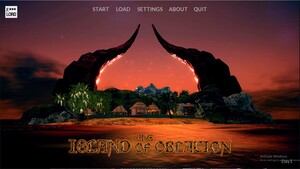



The Island of Oblation places you in a small, ritual-driven community where choices shape both the player and the island itself; The Island of Oblation opens with atmospheric narration that guides exploration, relationships, and ethical decisions from the first scene. This narrative-first experience emphasizes mood, character encounters, and the consequences of devotion, and it invites players who favor slow-burning storytelling over fast action to engage with a tightly written, introspective world.
The core of the game is choice and exploration rather than combat. Players move through interconnected locations, speak with islanders, examine objects, and make decisions that affect future interactions. Encounters are primarily dialogue and event-based: your answers, actions, and the order in which you visit places create divergent narrative threads. There are occasional environmental puzzles and context-driven interactions that require observation and inference rather than reflexes, so the experience rewards attention to detail and curiosity.
Controls are streamlined for mobile play with simple tap and swipe gestures to navigate scenes, advance text, and select responses. Menus and prompts are kept minimal to keep immersion intact: a contextual interaction button appears when objects can be examined, and dialogue choices are presented as readable, well-spaced options. The interface supports both portrait and landscape orientations and includes adjustable text size and speed to suit different reading preferences.
Progression is chapter-based and driven by narrative beats rather than experience points. As you explore, new areas of the island unlock and previously closed storylines become available depending on earlier choices. The game uses a cause-and-effect memory system that tracks key decisions and belief-based tendencies; these flags determine whom you can trust, which rituals unfold, and which scenes become available later in the story. Multiple endings and branching pathways encourage replay without relying on arbitrary grind or statistics.
The visual approach favors atmosphere: muted palettes, textured backgrounds, and carefully framed scenes create a sense of place and ritual. Locations are layered rather than strictly linear, so returning to a previously visited area after new information can reveal different interactions. Level structure emphasizes small, richly described neighborhoods and communal spaces where character-driven vignettes play out. The art direction supports the tone of the writing and leaves space for player imagination rather than illustrating every detail literally.
While character customization is modest and focused on narrative choices rather than cosmetic loadouts, players can shape their avatar's outlook and moral posture through dialogue and decisions. A persistent save system allows manual saves and a limited autosave profile so you can experiment with alternate choices. Replay value comes from the branching narrative, optional scenes that can be missed on a first playthrough, and the slow reveal of community secrets tied to different decision paths. The game is designed for several short or medium sessions rather than one prolonged sitting.
Accessibility options include adjustable text size, high-contrast mode for readability, and the ability to turn off timed choices to reduce pressure. Subtitles accompany all spoken narration, and the pacing controls let players slow or speed dialogue. The Island of Oblation supports full offline play after initial installation, so the narrative and all core features are available without an internet connection. This makes it suitable for commutes or locations with limited connectivity.
Challenges in the game are ethical and interpretive: decisions often have ambiguous consequences that require weighing loyalty, personal boundaries, and communal expectations. Occasionally a timed decision will test intuition, but most dilemmas are resolved through exploration and conversation. The user experience is intentionally contemplative, designed for players who appreciate character-driven encounters, atmospheric writing, and the sense that small choices can ripple outward to reshape relationships and the island itself.