Kpop FUCKING hunters
Version: 0.1
329.37MB
4.5
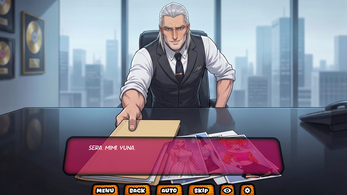
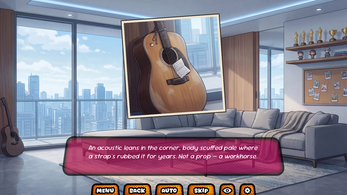
Kpop FUCKING hunters is a single-player narrative management game that places you in the practical, often tense, role of a live-in manager for a high-profile girl group. The description that follows outlines the core systems, controls, progression and accessibility options you can expect in the demo and full release; the title is intended for mature players and uses adult themes in a contextual, non-explicit manner. This editor introduction aims to summarize the gameplay loop, user experience and technical details in clear, neutral language so you can judge whether the game fits your interests.
The central loop of Kpop FUCKING hunters focuses on observation, decision-making and relationship management rather than reflex-based action. Players allocate time with a weekly planner, choose which rehearsals, interviews and rest periods to prioritize, and respond to interpersonal friction inside the shared living environment. The game tracks mood, trust and stress for each character with private trigger states; small acts like noticing a detail in a conversation or choosing to give someone space can shift those values and open or close narrative branches. Clues are gathered from dialogue, found items and environmental cues, and these clues unlock new responses and plot directions in later chapters.
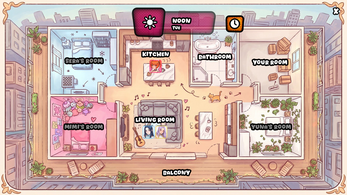
The interface is optimized for touch devices and emphasizes clarity: tap to inspect objects or characters, swipe to move between days and long-press to reveal contextual options such as detailed dialogue, a private notes panel or item descriptions. Menus are arranged so you can quickly access the weekly calendar, character dossiers and the clue log without interrupting the narrative flow. A choice log records past decisions and an optional hint system can help when you need to retrace a thought process; both tools aim to support intentional play rather than remove challenge.
Progression is chapter-based and branching rather than driven by levels or stats. Each chapter presents checkpoints determined by accumulated clues and relationship states, and the demo preserves significant choices so that important decisions carry over into the full game. Save management is transparent: visible autosaves and manual save slots let you experiment with different approaches and return to specific moments to explore alternate outcomes. There are no online leaderboards or multiplayer components—progression is entirely focused on a solitary story experience.
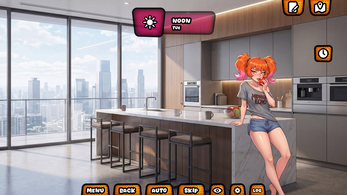
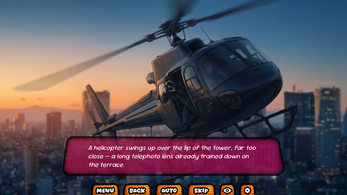
The game uses hand-drawn character art and carefully composed domestic interiors to establish a grounded, intimate atmosphere. Animated sequences punctuate major plot points and are designed as mature, stylized moments rather than explicit depictions. Sound design is restrained: subtle ambient effects and a minimal musical score shift to underline tension or quiet scenes, helping the visuals and character writing carry emotional weight without spectacle. Overall presentation favors texture and nuance to support slow-burn mystery and character-driven drama.
Each in-game week operates like a compact level featuring a mix of fixed events and randomized encounters; your choices determine which events become available. The primary challenge comes from limited time and competing priorities—balancing public obligations, rehearsals and private resolutions requires planning and attention to small details. Because minor observations can significantly alter relationships, the game rewards repeated playthroughs: revisiting the same period with different priorities yields distinct narrative outcomes and endings, encouraging careful experimentation rather than trial-and-error impatience.
Customization focuses on playstyle rather than performance tuning: you can choose to emphasize scheduling stability, candid conflict resolution or quiet emotional support, and the interface adapts accordingly. Text size is adjustable, a skip/read backlog is available for returning to missed lines, and subtitles can be toggled independently of audio. The user experience aims to be approachable for new players while offering the narrative depth expected by visual novel and time-management hybrid fans.
Accessibility is built into the UI with options such as a high-contrast mode, simplified input for players who prefer fewer gestures, and configurable control sensitivity. The game can be played offline after installation and stores saves locally so you can continue the story without a constant internet connection. These choices make it practical for mobile play in short sessions while preserving the integrity of branching storylines across sessions.
This experience contains mature themes and stylized adult scenes intended for an adult audience and is presented without explicit erotic detail; narrative context drives the inclusion of mature material rather than gratuitous content. The demo typically runs two to three hours and ends on a narrative turning point that leads into the full release. Kpop FUCKING hunters is described openly so players can make an informed choice about suitability and expectations.
The game runs on a wide range of modern Android devices and supports multiple languages in the demo. System requirements are modest, save for recommended screen sizes for the best visual experience, and no online account is required to play. The description above aims to give a clear, practical overview of mechanics, controls, progression and accessibility so you can decide whether this story-driven management title matches your interests.