
Echoes of 2990
Version: 0.1.2
326.30MB
4.1


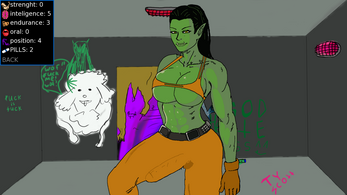
Echoes of 2990 places you in a gritty, near-future sci-fi story where a streetwise protagonist begins receiving sudden flashes of the future after one life‑changing incident. The narrative opens in urban backstreets and quickly escalates to an entry-level deep‑space mission to Andromeda, asking players to balance lawless instincts, emergent prophetic insight, and long-term decisions about colony building and alien contact. Echoes of 2990 is written for players who prefer character-driven branching stories, moral complexity, and a deliberate pace that emphasizes choices over reflexes.
The game emphasizes branching narrative paths and meaningful consequences rather than action-heavy gameplay. A core flash‑of‑future mechanic gives short prophetic glimpses that change available dialogue and mission branches, so foresight is useful but never absolute. Crew relationships and faction reputations matter: who you trust and how you lead will affect daily ship life, resource choices, and long-term colony viability. The setting shifts between neon cityscapes, confined starship corridors, and alien fringes to deliver varied moods and narrative beats throughout the campaign.
Gameplay centers on exploration, dialogue, and decision-making. Each chapter presents a mix of scene exploration, character encounters, and mission decisions that branch according to prior actions. The flash‑of‑future mechanic functions as both a storytelling device and a tactical element: visions may hint at possible outcomes or reveal subtleties in conversations, encouraging players to weigh immediate benefits against delayed consequences. Encounters with alien cultures focus on diplomacy and investigation rather than combat, keeping the spotlight on interpersonal and ethical dilemmas.
The interface is optimized for touch devices with straightforward tap and swipe inputs to advance dialogue, choose responses, and navigate menus. Dialogue options are clearly labeled and presented with contextual cues to help anticipate their likely impact. Quick save, autosave tied to chapter checkpoints, and a simple menu layout reduce friction so players can concentrate on narrative choices rather than complex controls. The UI design emphasizes legibility and unobtrusive feedback during conversations and mission selections.
Progression is organized by chapter-based arcs: completing a mission unlocks subsequent narrative paths and new conversation branches. Reputation meters track standing with key crew members and factions and influence which support options or mission approaches are available. Customization focuses on narrative agency — you shape the protagonist's leadership style, moral outlook, and interpersonal priorities, which open unique scenes and endings. Resource decisions appear as situational trade-offs instead of a traditional inventory system, reinforcing a story-first design philosophy.
The visual presentation pairs gritty, neon-infused urban environments with the colder, geometric interiors of starships and the stranger vistas of Andromeda. Character portraits and expressive dialogue windows emphasize performance and mood, while cinematic transitions signal tonal shifts between chapters. Levels are structured as discrete narrative episodes with clear objectives and optional side scenes that deepen backstories and motivations. The art direction favors stylized character design and atmospheric backgrounds to support emotional beats without relying on explicit imagery.
Echoes of 2990 encourages multiple playthroughs through branching endings, hidden conversation paths, and the unpredictable effects of the flash‑of‑future mechanic. Replay value comes from experimenting with different alliances, leadership choices, and resource trade-offs to see how small decisions ripple across later chapters. Optional hard choices and resource‑restricted scenarios provide added challenge for players who want to test alternate strategies and observe divergent colony outcomes.
The game includes adjustable text sizes, subtitle options, and contrast settings to make dialogue-heavy sequences easier to follow in varied lighting. Designed primarily as a single-player, offline experience, Echoes of 2990 can be played without a persistent internet connection and supports quick save and resume on the go. Session lengths are modular by chapter, enabling both short bursts of play and longer narrative sessions depending on player preference.
Version 0.2.1 expands the early campaign with New Chapter 2, adding dialogue branches, new crew interactions, and consequential choices that reshape later events. These additions increase the number of viable narrative paths, deepen character relationships, and provide more opportunities to explore the interplay between prophetic glimpses and leadership decisions in Echoes of 2990.