My Tiny Tower
Version: 0.5.1
41.10MB
4.3
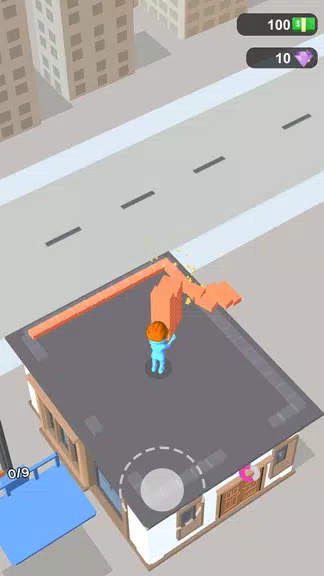
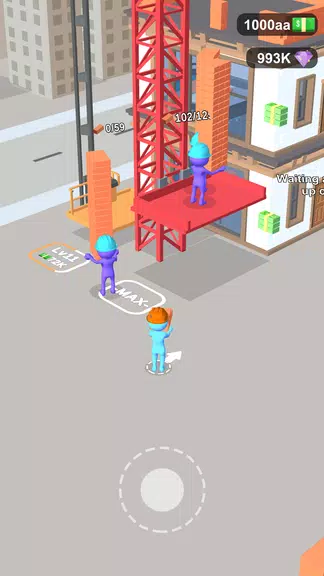
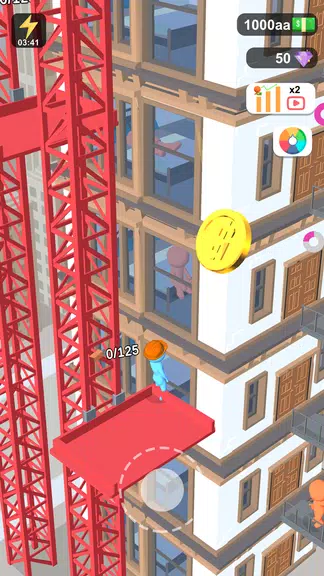
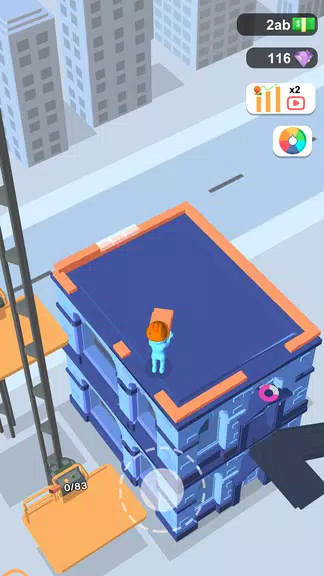
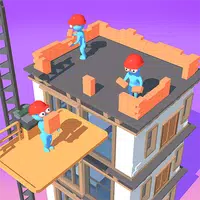
My Tiny Tower is a minimalist stacking game that puts precision and steady progression at the center of a single-player building experience. In My Tiny Tower you begin with a mounted starter brick and place one piece at a time to grow a vertical skyline, occasionally rotating bricks upside down to solve placement puzzles; the result is a clear, tactile loop that rewards careful timing and spatial thinking.
The core mechanic in My Tiny Tower is intentionally straightforward: place bricks to add floors and extend the structure upward. Each placement requires alignment and timing, and upside-down pieces introduce a small but meaningful twist to basic stacking. The physics are forgiving enough to keep play accessible while still making accuracy matter as towers grow taller. There are no menus full of confusing systems — the game focuses on a single, satisfying objective: reach new heights by stacking steadily.
Controls are designed for touch screens and short play sessions. Tap to drop a brick, or slide to adjust horizontal positioning before committing; a simple hold-and-release option lets players fine-tune placement if they prefer slower, steadier control. Animations and clear visual cues indicate when a brick is properly aligned, and small tactile responses make each placement feel meaningful. These control choices make My Tiny Tower approachable for new players while still offering room for practiced precision.
Progression is mostly visual and incremental: each successful placement expands your tower and reveals new architectural silhouettes. Milestones mark progress — for example, reaching a certain number of floors changes skyline lighting or introduces slightly different brick shapes that challenge placement strategy. Difficulty increases gradually through tighter placement windows and the occasional inverted piece rather than abrupt spikes, which keeps the experience focused and fair. Players can measure success through personal best heights and visible tower transformations.
Rather than discrete levels, My Tiny Tower uses open-ended runs where the main goal is continuous stacking. This structure supports repeat play: short sessions let you practice a few placements, while longer runs test endurance and consistency. Replay value comes from refining technique, attempting higher towers, and experimenting with placement patterns; because the mechanics are simple, small improvements feel meaningful and encourage repeated attempts.
The presentation is intentionally minimalist, emphasizing clean lines, muted palettes, and clear contrast so each brick is easy to read at a glance. Visual progression is a central reward — the tower takes on a more impressive silhouette as floors accumulate, and camera framing adapts smoothly so taller structures remain visible. The interface avoids clutter, keeping controls and status information unobtrusive so attention stays on stacking. The result is a calm, focused atmosphere that highlights the tactile pleasure of construction.
Customization in My Tiny Tower emphasizes accessibility rather than complex unlock trees. Adjustable control sensitivity and optional slow-motion placement help players with different dexterity levels enjoy the game. Visual options such as contrast adjustments and simplified UI elements support readability. These settings aim to make the game welcoming to a broad audience without changing the core stacking experience.
My Tiny Tower is a self-contained single-player title that can be played offline, so you can stack without a network connection. Performance is tuned for smooth frame rates on a wide range of devices, and the lightweight art style keeps file size modest. Because the game relies on short, repeatable sessions, it is well suited to mobile play during commutes or breaks.
If you appreciate focused, mechanics-driven gameplay and the quiet satisfaction of steady progress, My Tiny Tower offers a compact, well-paced experience. It’s especially suitable for players who enjoy sharpening timing and spatial skills over repeated runs, and for anyone looking for a low-friction game that emphasizes control, visual progression, and simple, compelling stacking mechanics.