Photo Roulette
Version: 116.0.0
87.00MB
4.5

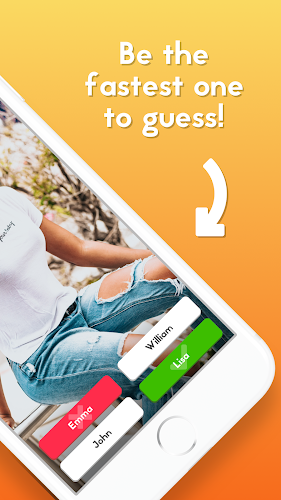
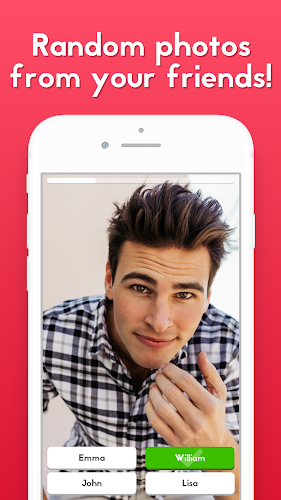
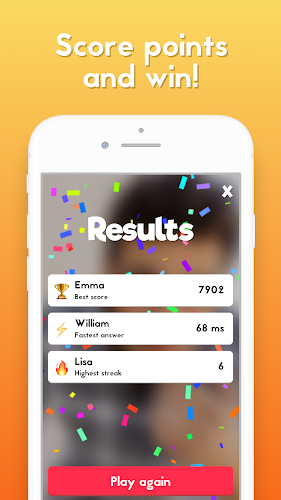
Photo Roulette is a lively party game that converts your existing phone photos into short, competitive rounds — ideal for family nights, get-togethers, and small parties. In Photo Roulette a random image is pulled briefly from one of the players' photo libraries and shown for five seconds while everyone races to guess who owns the picture; points are awarded for speed and accuracy and after ten pictures the in-match highscore declares a champion. This opening paragraph summarizes the core loop so you know exactly how a typical session plays out and why the format creates fast, repeatable rounds.
The core mechanic in Photo Roulette is intentionally simple: each match consists of ten randomly selected photos taken from the devices of participating players. On a turn a single photo appears on-screen for a short, fixed reveal period and all participants choose which player they think the image belongs to. Scoring favors quick, correct answers so the leaderboard changes every turn and encourages close competition; the mechanic rewards both memory and the ability to read a friend’s style of photos. Matches are designed for 3–10 players and play out in short bursts so large gatherings can play multiple rounds within an evening.
Controls are straightforward and aimed at being approachable for all ages: players tap the name or avatar of the person they think owns a shown photo, and the interface confirms the guess and updates scores immediately. Device passing is the natural social interaction pattern — hand the phone or tablet to the next player when a round ends — and the interface keeps buttons prominent and clearly labeled to reduce mistakes during fast turns. There are no complex menus during play: all essential actions are visible on the main match screen so new players can jump in within seconds.
Progression in Photo Roulette focuses on moment-to-moment competition rather than persistent leveling: every match produces a highscore table that highlights the top performers and crowns a match champion. This local highscore list provides immediate feedback and a reason to replay rounds with the same group. Because each match is short, players often play multiple matches back-to-back to try different strategies for guessing or to see how scores change with different groups and photo selections.
The app emphasizes the photos themselves by using a clean, minimal visual style: large image previews, a visible countdown timer, and unobtrusive player panels make it easy to focus on the picture and the guessing moment. Level structure is correspondingly simple — each match is a single level comprised of ten turns — which keeps the experience accessible and avoids long setup times. The design choice keeps attention on the social surprise of each reveal rather than on layered menus or progression screens.
Photo Roulette supports basic personalization that enhances social play: players can enter nicknames before a match and the app remembers the latest participant list for convenience. The primary source of replay value is the photos themselves: because images are pulled randomly from participants’ libraries, every match delivers fresh, unpredictable content that encourages laughter, storytelling, and rediscovery of old pictures. Short match length and immediate scoring make it natural to play multiple rounds, vary participants, or introduce small house rules without needing app-level changes.
The user experience is geared toward simple setup, quick matches, and social interaction. Photo Roulette works locally using the photos on the device and does not require an internet connection to play, which makes it suitable for locations without reliable connectivity and helps keep image access private to the device. The UI uses large touch targets and clear contrasts to assist visibility during lively gatherings; because gameplay is brief and turn-based, the app is also forgiving for players who need a moment before answering. These design choices support inclusive sessions without assuming any online account or persistent profile.
Challenge comes from the mix of photo selection and the five-second reveal: the timer enforces quick decision-making while the scoring system balances speed and accuracy so a careful guess can still pay off. The random selection mechanic can surface surprising or private images, so groups often review photos before play or agree on boundaries ahead of time. Photo Roulette’s emphasis is on social fun and shared memories rather than high-stakes competition, making it a light, repeatable party experience for a variety of groups.