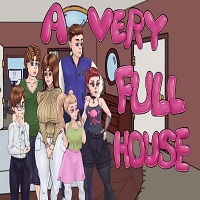
A Very Full House
Version: 0.22.3
219.06MB
4.1



A Very Full House places you in a character-driven sandbox where choices, household dynamics, and interpersonal strategy shape a branching narrative. In A Very Full House you take on the role of a mature protagonist navigating complex relationships, personal dilemmas, and the evolving rhythm of daily life in a shared home setting. The description below outlines how the game balances narrative depth with interactive systems while remaining neutral about explicit content: the focus is on consequence-driven storytelling and player agency rather than graphic detail.
The game centers on a single household environment populated by distinct characters, each with their own motivations and routines. Players are invited to explore social approaches, persuasion tactics, and privacy boundaries through dialogue, observation, and in-world choices. Scenes are presented with animated 2D CG art and cinematic framing that emphasize expression and mood. The tone is mature and suggestive by design, intended for an adult audience, but the writing and mechanics keep events descriptive rather than explicit.
Key features include a sandbox-style structure that encourages experimentation with different social strategies, a focus on narrative branches where decisions unlock varied outcomes, and animated 2D visuals that bring characters and locations to life. The game presents a range of interpersonal scenarios—from tense confrontations to quieter, emotionally driven moments—structured so that player decisions influence relationship meters, reputation within the house, and access to new scenes. All interactions are driven by clear choices and readable feedback, which help players track how their actions alter the household dynamic.
Gameplay combines dialogue-driven scenes with light interactive mechanics. Controls are optimized for touchscreen devices: tap to advance dialogue, swipe to navigate environments, and use contextual menus for selecting persuasion or action options. Certain encounters include timed decisions or small skill checks that require quick choices, while others reward patient observation and relationship-building. The interface emphasizes clarity—character portraits, relationship indicators, and logs keep players informed about current objectives and recent developments.
Progression is centered on narrative beats and relationship progression rather than levels or combat. As you interact with household members, you raise or lower relationship meters, unlock new scene branches, and gain reputation or influence that opens alternate story paths. Multiple endings are possible depending on accumulated choices, so replay value is high: players can experiment with different approaches to persuasion, focus on different characters, or explore overlooked areas of the house to reveal hidden events. Save slots and a chapter-based navigation system make it straightforward to revisit key decision points without replaying the entire experience.
The artistic direction relies on animated 2D CG with detailed character expressions and staged scenes that emphasize mood over explicit depiction. Visual presentation includes scene transitions, portrait close-ups, and occasional animated interludes to highlight turning points. Customization options let players influence the look of the protagonist and certain elements of the home—outfits, decorative choices, and some environmental details—so the setting reflects player decisions and supports storytelling variety without changing core mechanics.
Level structure is organized around days, events, and household episodes rather than discrete maps. Each day can present tasks, social opportunities, and emergent events that require balancing time and resources. Challenge systems are narrative-driven: persuasion checks, social standing, and timed opportunities create tension and reward thoughtful play. Occasional mini-challenges or situational puzzles add variety, encouraging players to adapt their approach depending on which goals they prioritize during a playthrough.
The interface aims for readability and ease of use: adjustable text size, clear contrast for portraits and backgrounds, and simple navigation controls make the game approachable on phones and tablets. A Very Full House is designed to be playable offline after the initial download, with no mandatory online connection for core story content. The game is currently presented in English; in-app text is concise to aid comprehension. Because the content deals with mature themes, the app includes an age gate and clear content warnings so players can make informed choices before playing.
Advantages include a strong emphasis on narrative choice, animated 2D presentation, and a sandbox structure that encourages replay and experimentation. Limitations are straightforward: the mature thematic focus narrows the audience to adults, and English-only text may restrict accessibility for non-English speakers. The game’s niche appeal means it may not suit players seeking non-adult or casual puzzle experiences, but those interested in character-driven interactive storytelling will find substantial content to explore.