Stick vs Zombies
Version: 1.5.40
58.53MB
4.2
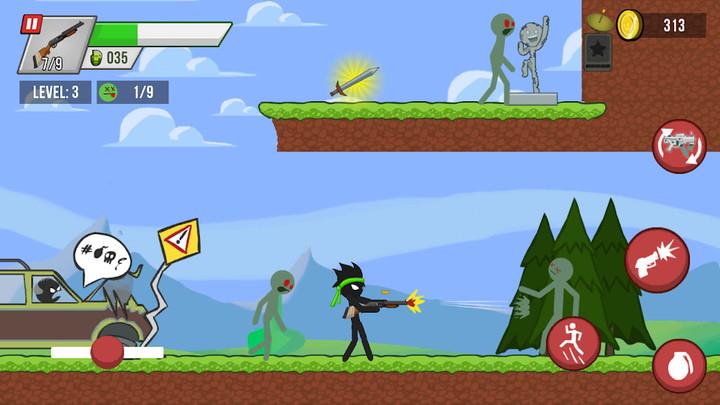
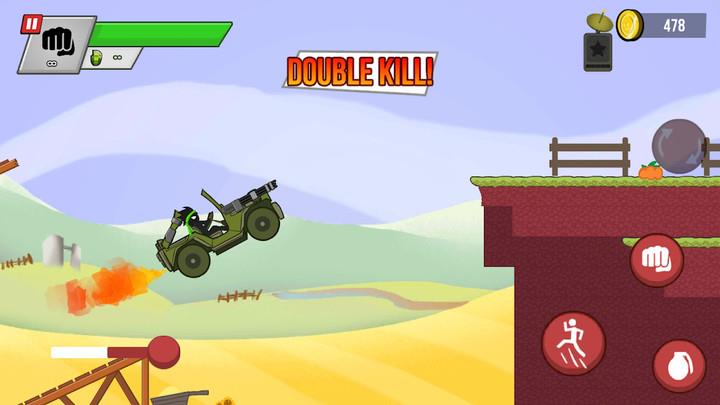
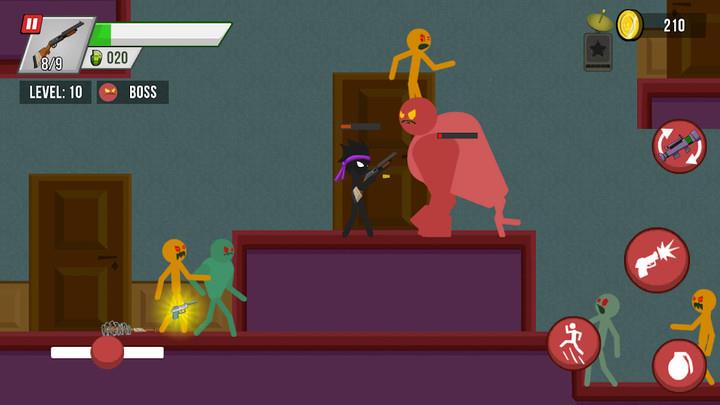
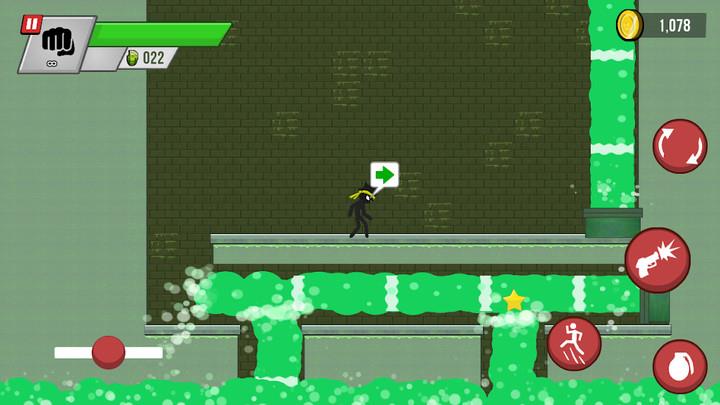
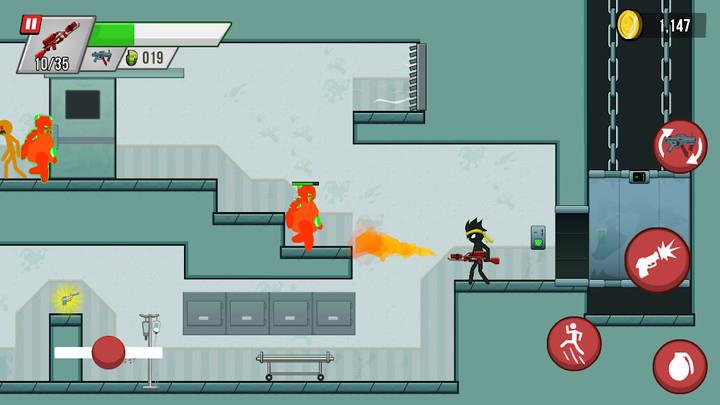
Stick vs Zombies is a compact action-platformer that drops you into rapid, arcade-style encounters against waves of undead. Stick vs Zombies emphasizes tight movement and close-quarters combat: run, jump, wall-climb and hang from ledges while switching between melee combos and a modest selection of firearms to survive escalating stages. This introduction focuses on the play loop — clear short stages, experiment with loadouts, and improve through repetition — so new players reach the core gameplay quickly and enjoy repeatable runs.
The heart of the experience is moment-to-moment decision-making. Controls are designed for touch screens with a minimal, context-sensitive layout that supports grabs, ledge transitions and quick weapon swaps without overwhelming the display. Movement is responsive: parkour elements like wall-climbs and ledge-hangs open tactical options, while melee attacks reward timing and positioning through combo chains that break through enemy defenses. Ranged tools are intentionally limited and readable so you can manage space and prioritize threats. The overall aim is simple inputs that allow advanced players to chain maneuvers in frantic situations while keeping the entry cost low for casual sessions.
Progression in Stick vs Zombies centers on clearing multi-wave stages to unlock new levels and weapon choices that alter your approach to encounters. Instead of relying on constant online checks, the app stores progress locally so you can advance offline and sync leaderboards or cloud saves later when convenient. Customization focuses on practical loadout decisions rather than cosmetic clutter: pick weapons and tactics that suit your preferred playstyle, whether that means hit-and-run parkour, close-range combo mastery, or using firearms to control crowds from a distance. The economy and rewards are designed to encourage experimentation rather than force repetitive grinding.
Stages are short by design and built around replayability: expect compact layouts with vertical sections, narrow ledges for tense encounters, and open spaces that favor ranged approaches. Level variety comes from layout changes and enemy placements rather than long single-mission objectives, which keeps runs quick and focused. The art direction uses a minimalist stickman aesthetic with clear silhouettes and high-contrast enemy shapes so threats remain visible even in hectic moments. That pared-back style supports consistent performance across many devices and keeps the emphasis on gameplay rather than flashy visuals.
Difficulty ramps through wave escalation and enemy variety rather than artificial timers or paywalls. Each stage introduces new enemy behaviors and combinations that require adapting both movement and weapon choices. This design rewards learning attack windows and route optimization: replaying a level becomes about mastering timing, refining combos, and shaving seconds off completion times. Optional online leaderboards add a competitive layer once you choose to connect, but the core game remains satisfying in offline practice runs as well.
Stick vs Zombies aims for clarity and approachability in its interface: uncluttered controls, a focused HUD, and layout scaling that adapts to different screen sizes and performance profiles. Important cues such as incoming enemy types, interactive ledges and low-health states are emphasized so players can make split-second choices reliably. While the gameplay leans toward an arcade-style challenge, session lengths and clear restart options let you step away and return without losing progress, which suits both short commutes and longer practice sessions.
The app supports a mostly offline experience: progress is saved locally and can be synced to cloud saves or leaderboards when you reconnect to the internet. Online features are optional enhancements—leaderboards and sync are available for players who want to compare scores, but they are not required to enjoy the full single-player content. This balance lets you play on the go, keep making meaningful advancement without constant connectivity, and use online features only when they add value to your play style.
Players looking for a relaxed, low-stress experience should be aware that the title emphasizes increasing difficulty and precise timing, which can be challenging for some. A handful of convenience features require an internet connection to function, and performance will vary on very old hardware despite optimizations. These trade-offs are intentional: they preserve short, replayable runs and a clear skill curve that rewards practice, while keeping the overall package lightweight and suitable for many devices.