
Jane Doe
Version: 1.0
169.58MB
4.1
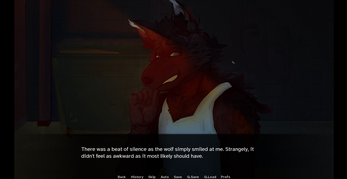
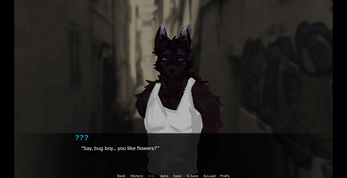
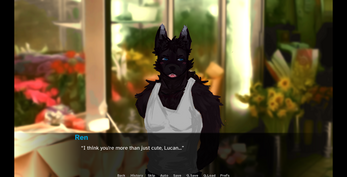
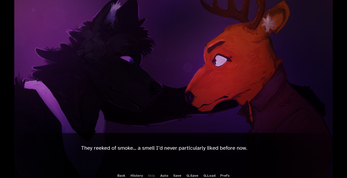
Jane Doe is a linear visual novel that places the player inside a slow-burning, intimate story focused on Lucan and Ren, a strange wolf whose arrival fractures routine and forces difficult emotional choices. Jane Doe emphasizes mood, dialogue, and atmosphere over conventional game mechanics, offering a contained single-route experience that will appeal to players who favor narrative depth and psychological themes. This first installment is presented with a content warning for violence, mature themes, and psychological material, and it includes an original soundtrack that reinforces the game’s tense and reflective tone.
The core gameplay in Jane Doe is centered on conversation and close third-person narration rather than puzzles or combat. Interactions are presented as text-driven scenes where you progress by tapping to advance lines, with an auto-play option for a hands-off reading experience and a backlog feature to review prior dialogue. Controls are intentionally simple: touch to continue, long-press to reveal dialogue history, and on-screen buttons to toggle text speed and audio volume. This minimal control scheme keeps the focus on character development and the emotional cadence of each scene.
Progression in Jane Doe follows a linear day-by-day structure that traces Lucan’s shifting perspective as relationships deepen and tension accumulates. Rather than branching paths, the narrative is a single route divided into clearly signposted segments that mirror days or moments of escalating unease. Each segment builds on the last, using pacing and revealed backstory to create a sense of forward momentum. Because the release is Part 1, the installment is designed as a complete, compact chapter that also sets narrative hooks for potential future entries without relying on branching choices.
The visual presentation favors a moody, illustrative aesthetic that supports the psychological tone of the story. Expect carefully composed backgrounds, character portraits with subtle expression changes, and limited scripted animations that punctuate key moments rather than constant movement. The UI is clean and unobtrusive, with readable typography and a dialogue box designed to keep attention on the characters and atmosphere. Visual transitions and color shifts are used deliberately to mark emotional beats and changes in the protagonist’s perception.
Music plays a central role in setting tone: an original soundtrack composed for the project underscores scenes of unease and warmth, using sparse arrangements and ambient textures to complement the writing. Sound design is restrained but purposeful, with environmental cues and subtle effects that enhance immersion without overpowering the dialogue. Audio settings allow you to adjust music and effects independently so you can tailor the soundscape to your listening preference.
Jane Doe includes several quality-of-life options aimed at accessibility and comfort. Users can adjust text size and text speed, enable high-contrast text for readability, and toggle subtitles for all voiced or heavily audio-reliant moments. The game also offers a content warning screen at launch with a skip option for those who accept the listed themes, and there are settings to mute specific audio layers. These choices help make the experience approachable for a wider range of players while maintaining the intended atmosphere.
While Jane Doe is deliberately single-route and not designed around multiple endings, replay value comes from re-examining lines of dialogue, appreciating the soundtrack in context, and noticing subtle visual or textual details you may have missed on a first playthrough. The compact runtime and focused narrative make it easy to revisit the chapter, and players who enjoy dense character work can return to analyze interactions and tone. The developer also plans to consider player response when approaching future parts, so engagement may shape the continuation of the story.
Once downloaded, Jane Doe runs offline and does not require a persistent internet connection to play, making it suitable for travel or situations where connectivity is limited. The title is optimized for consistent performance on a range of devices; because the game avoids heavy real-time rendering, it maintains steady battery and resource usage while preserving audio and visual fidelity.
Created for the May Wolf Jam 2026 as a focused narrative experiment, Jane Doe represents a concentrated exploration of atmosphere and character-driven storytelling. Music is credited to Tri-Tachyon and supports the game’s emotive pacing. This release functions as Part 1 of a larger story concept, and the team has indicated that future installments may follow depending on feedback and creative direction.