Crimson Creek
Version: 1.0.1
403.51MB
4.5
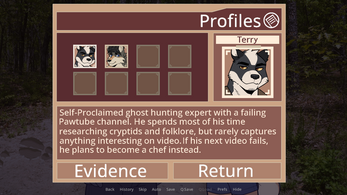
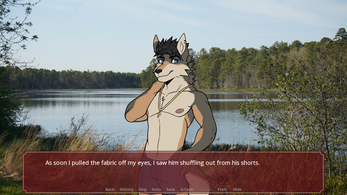
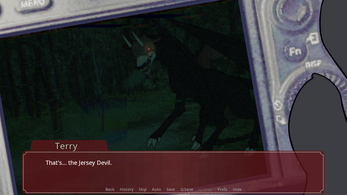
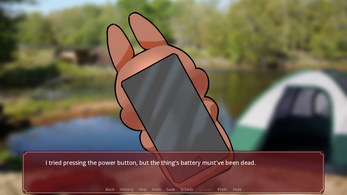
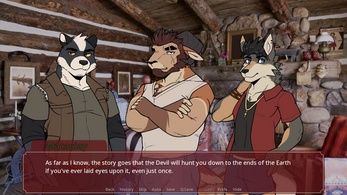
Crimson Creek is a compact, story-driven visual novel for adult players that blends slice-of-life, investigation and slow-building horror into an atmospheric single-session experience. You follow Terry and Shane on a weekend trip into the Pine Barrens that starts as a mundane attempt to capture viral footage and becomes increasingly unsettling when the legendary Jersey Devil turns up. The game is intentionally concise—roughly 15,000 words—and designed to deliver a focused narrative with short investigative segments and illustrated scenes; note that Crimson Creek contains explicit sexual content and nudity and is restricted to players 18+.
The core of the experience centers on a linear, tightly paced story with intermittent Investigation Sections that let you influence conversations and present gathered evidence. Investigation Sections replace branching endings with close, conversational control: selecting topics and evidence will shape how scenes develop and which character beats are revealed, but the overall plot remains a single, cohesive path. Illustrated scenes and commissioned audio provide atmosphere while the short length makes the title approachable for a single sitting or a quiet evening of interactive fiction.
Gameplay in Crimson Creek is primarily narrative reading with occasional interactive moments. Controls are optimized for touch: tap or click to advance text, choose dialogue options from a simple menu, and use the Investigation UI to pick topics and present evidence during interviews. The interface includes a readable backlog so you can review prior lines, adjustable text speed, and basic save/load support that places checkpoints between major sections to preserve your progress. These controls keep the focus on story and character interaction rather than complex mechanical systems.
The game is organized into compact chapters that follow the trip chronologically: setup, the first sign something is wrong, and escalating encounters that combine mystery and intimate character moments. Investigation Sections are interspersed throughout these chapters and act as pacing devices: choosing which lines of inquiry to pursue can unlock additional dialogue and visual content, but does not create divergent endings. This structure emphasizes discovery and interpretation over branching plot outcomes, which suits players who prefer a complete, authored narrative rather than a branching simulator.
Visually, Crimson Creek uses 2D illustrated scenes and character art to set tone and mood rather than full-motion animation. Artwork favors moody lighting and a natural palette that contrasts quiet daylight camping moments with the darker, claustrophobic tones of nighttime woods. The soundtrack includes commissioned tracks by jovejivejove and a selection of royalty-free pieces to reinforce atmosphere; ambient sound design and selective music cues are used to heighten tension without overwhelming the voice of the text. Together, art and audio aim to make scene transitions feel immediate and cinematic within a text-first format.
The app includes adjustable text speed and font size to accommodate different reading preferences, plus volume sliders for music and ambient sound. A content warning appears before adult material, and the application requires an age confirmation before explicit scenes. Crimson Creek is a single-player experience that runs offline once installed, so you can play without a persistent network connection. These choices were made to prioritize readability and low-friction gameplay on phones and tablets.
Because the narrative is linear, replay value is naturally limited compared with branching visual novels. However, the Investigation Sections and optional dialogue choices can reveal additional lines of character development, alternate illustrated moments, and small details missed on a first playthrough. Players who enjoy analyzing clues and noting differences in conversations may find repeat plays rewarding for the extra character nuance and scenic art variations, even if the ending remains the same.
Crimson Creek was developed solo for a May 2026 game jam; one creator handled writing, coding and art to preserve a consistent tone, with music contributions by jovejivejove and a few licensed royalty-free tracks rounding out the soundtrack. The game reflects a compact, author-driven approach to interactive short fiction and is presented as a contained experience rather than an ongoing service.