Way Off The Map
Version: 1.0
996.86MB
4.5
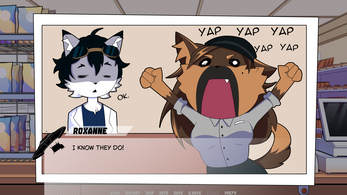


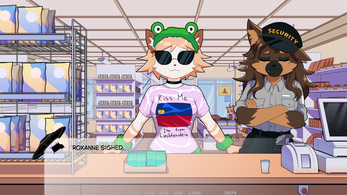

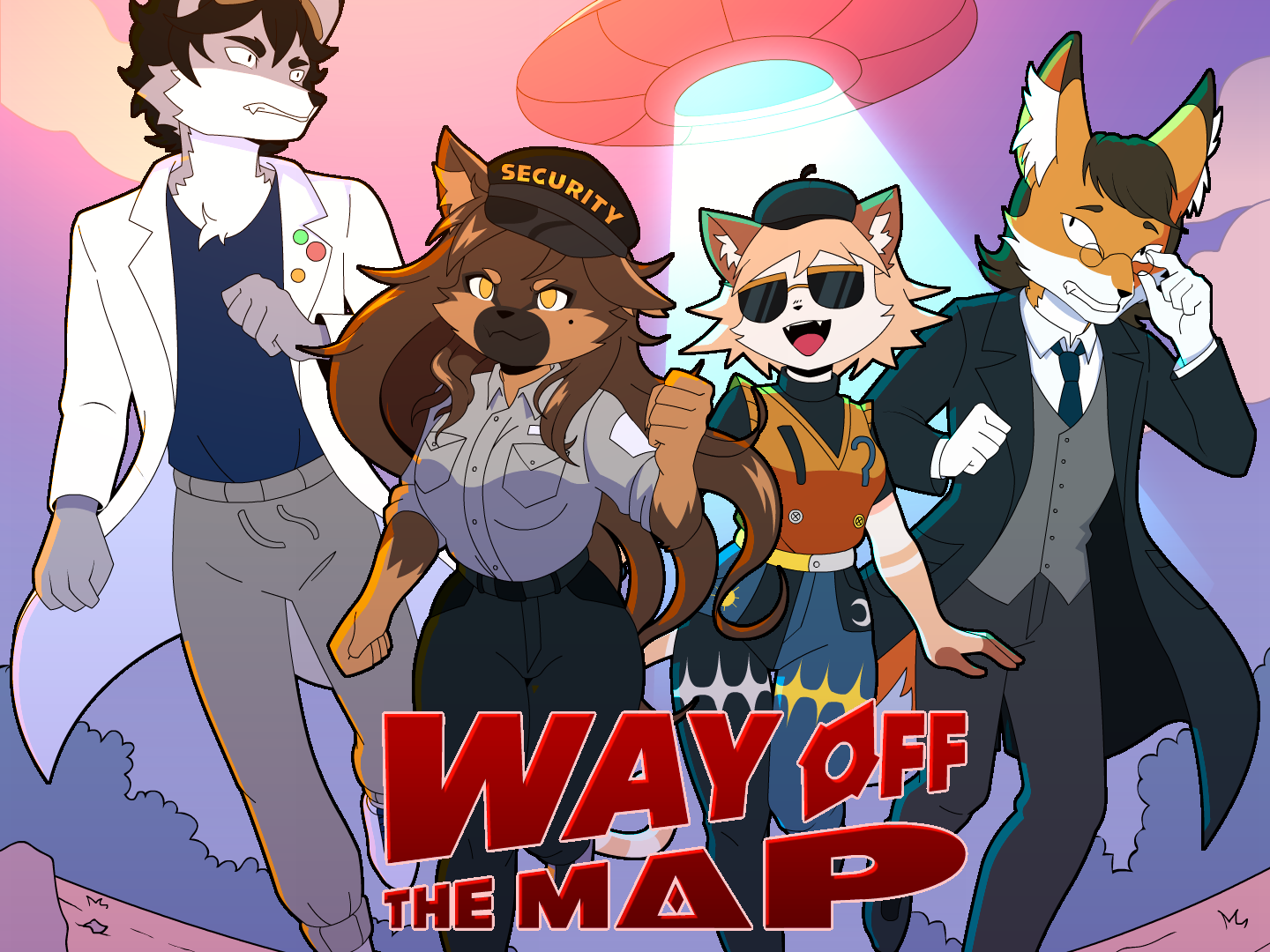
Way Off The Map is an adult visual novel that places you in a slow-burning, atmospheric mystery where romance, conspiracies and the paranormal overlap. You play Miles, a young man kicked out by his parents who takes refuge at his uncle’s isolated roadside store in a pine forest, and quickly encounters humming metal doors, suspicious customers and shadowy figures that watch from the trees. Way Off The Map emphasizes careful reading, branching choices and character-focused scenes over fast action, creating a tense narrative experience that unfolds through your decisions rather than reflexes.
The core gameplay revolves around branching dialogue and scene selection: conversations, short exploration segments inside and around the store, and key decision points that set narrative flags. Choices affect how characters respond, the order in which secrets are revealed, and which scenes become available later in the story. The structure is chapter- and scene-based, with each chapter designed as a self-contained sequence that builds into a larger mystery. Progression depends on narrative flags and relationship cues rather than experience points or combat—your attention to detail, the options you pick and the relationships you nurture determine which narrative threads are followed to their conclusion.
Controls are designed for mobile simplicity: tap-to-advance text, tap choices to select responses, and a visual backlog so you can review prior lines. Standard visual novel conveniences are included, such as auto-advance, adjustable text speed and quick-save/load slots that let you branch without losing your place. The interface keeps interaction unobtrusive so players can focus on dialogue and atmosphere rather than complex control schemes. Touch input is the primary control, with large, readable choice buttons and clear on-screen prompts.
Progression in Way Off The Map comes from discovering different paths through the story and from the cumulative effects of choices. Multiple endings and secret scenes reward players who explore alternate response patterns and revisit earlier decisions. Relationship cues and narrative flags accumulate across chapters, opening unique scenes or altering later conversations, which encourages replay to see how different choices change outcomes. There is no grinding or leveling—progress is narrative-driven, and the main challenge is piecing together clues and deciding whom to trust.
The game leans on moody, 2D illustrated backgrounds and character portraits to create a sense of place: the roadside store, the humming room behind a metal door and the surrounding pine forest all contribute to a persistent feeling of unease. Lighting, color palettes and ambient sound design are used to heighten tension rather than deliver jump scares. Voice work, where present, is sparing and intended to underscore key moments, with soundtrack and environmental audio supporting immersion. The visual presentation aims for an intimate, literary tone that complements the dialog-driven pacing.
Settings allow you to tailor the reading experience: text size and font options for legibility, screen brightness and background dimming to reduce visual clutter, and audio sliders for background music and sound effects. Accessibility features include a text backlog, the ability to skip read text, and configurable text speed so players who read more slowly can follow without missing nuance. These options make the game approachable for a wider audience while preserving the intended atmosphere.
The primary challenges are narrative and cognitive rather than mechanical. You’ll be tested on attention to dialogue, the ability to infer motives from limited information and the willingness to make morally ambiguous choices. Some decisions have immediate consequences that close off later options; others accumulate to change relationships and endings. This design rewards careful reading and thoughtful play rather than quick reactions.
The game is designed to run offline after installation, letting you play without a persistent internet connection. Save slots, autosave and quick-save features let you manage multiple playthroughs locally. The title is optimized to keep load times short and to maintain consistent performance on mid-range devices. Because the narrative is the central element, the overall file size focuses on art and audio that support the mood rather than large, streaming assets.
Way Off The Map is aimed at players who appreciate slow-burn storytelling, layered characters and choices that carry emotional weight. If you prefer narrative-driven experiences that prioritize atmosphere, reading and replayable branching content, this game offers a compact but richly textured mystery to explore.