Rapsy
Version: 1.0.6
51.82MB
4.1
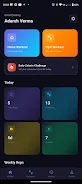
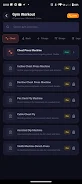
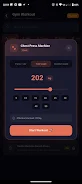
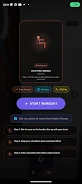
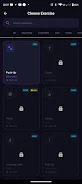
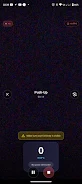
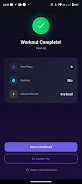
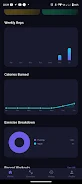
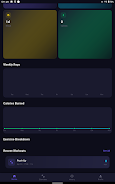
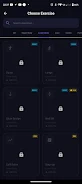
Rapsy turns your phone into an on-device personal trainer that counts repetitions, provides real-time voice coaching, and estimates calorie burn using pose detection processed locally on your device. Rapsy is built for people who want to focus on movement and form instead of manual logging: the app maps joint angles through the camera to recognize over 70 exercises, tracks tempo and isometric holds, and runs entirely offline so video never leaves your phone.
The core of the app is automatic repetition detection and live coaching: a visual overlay shows joint locations and angle readouts while the built-in rep counter tallies sets so you don’t need to look at the screen between reps. Real-time voice feedback announces rep counts and offers simple cues to help you keep cadence and maintain safe form. Timer modes cover common isometric holds such as planks and wall sits, with audible progress updates. A comprehensive exercise library supports bodyweight movements and common gym equipment movements like presses, pulldowns, curls and rows. For calorie estimation, the app uses MET-based calculations and includes a gym mode where entering the lifted weight refines the burn estimate.
The pose detection runs fully on-device: your camera feed is analyzed locally and the app generates session summaries, rep totals and form metrics without uploading video to servers. During a workout Rapsy monitors joint angles and movement patterns to detect repetitions and hold times, then applies simple metabolic equivalents to produce calorie estimates. Session summaries include total reps, calories, and a breakdown by exercise so you can quickly review what you did and how intensity changed across the session.
Getting started is straightforward: choose an exercise or a short routine, position your phone so your full body is visible, and tap start. The UI centers on a clear live view with a minimal overlay showing rep count, timer and coaching cues; you can pause, resume or stop a set with single taps. Voice guidance is adjustable and can be muted or reduced to occasional cues if you prefer silence. Camera placement guidance appears before you begin to help optimize detection and get consistent results from session to session.
The app supports simple progression mechanics through adjustable rep targets, tempo guidance and daily calorie challenges that encourage consistency. You can set personal goals for weekly reps or calories and track progress in the analytics dashboard. Replay value comes from mixing tempo variations, increasing isometric durations, or repeating circuits with different exercises from the library. Progress charts let you compare weekly totals and drill down into specific movements to identify consistent improvements or plateaus.
Customization options let you tailor sessions to your needs: pick exercises from the library, adjust timer lengths for holds, set rep ranges, and choose whether voice cues announce every rep or only set completions. Gym mode lets you enter weights for lifts to improve calorie estimates, and units can be switched between metric and imperial. While Rapsy does not require account creation, saved session templates and basic workout presets make it easy to repeat preferred routines without rebuilding them each time.
The app uses a clean, uncluttered visual style designed for quick readability during workouts: large counters, high-contrast overlays and concise text prompts keep attention on movement rather than menus. Accessibility features include adjustable voice volume and cue frequency, scalable font sizes for on-screen labels, and guidance messages to help with camera framing. Because detection is local and does not rely on network connectivity, Rapsy remains available in low-connectivity environments and conserves data.
Privacy is a central consideration: all video and pose processing occurs on-device and no raw video is transmitted to external servers. Session logs, rep counts and summary metrics are stored locally and can be exported manually if you want external backups. Limitations include the need for a clear view of your body and adequate lighting; camera angle and room space will affect detection accuracy. Calorie estimates are based on MET values and improve when you provide weight for lifted loads—these remain estimates rather than clinical measurements. As with any exercise tool, use common-sense safety precautions and consult a professional if you have health concerns.